


Introduction
From the fifteenth century to the beginning of the twentieth, the Ottoman lands were among the areas that drew the most intense interest from European observers. Venetian envoys, French botanists, British officers, and German archaeologists turned toward the same lands in different eras and with different motives. The corpus of travel accounts, reports, drawings, maps, and photographs they left behind is today among the indispensable sources for understanding the Ottoman world. Yet to read this corpus merely as travel literature would be to overlook its true nature.
For Western travelers did not simply tour the Ottoman lands and describe them. They classified the state organization, the order of the army, the caravan routes, plants and animals, religious sects, the daily life of women, and ancient ruins, and transmitted all of this to Europe. Thus there emerged a comprehensive regime of information gathering operating across travel accounts, embassy reports, costume albums, botanical catalogs, maps, and photographs. In short, this observation is, by its very nature, a dual-use production of knowledge. The knowledge produced often became detached from the observer's intentions, and a botanist's route notes could become a source for an army's operational plan, a painter's engraving of a fortress a source for a navy's assessment of fortifications. The political and strategic dimension of this knowledge is elaborated in the sections that follow.
Below, the discussion first addresses how this knowledge regime operated and then presents an annotated catalog of some one hundred and fifty Western observers who recorded the Ottoman lands from the fifteenth century to the beginning of the twentieth. Each entry in the catalog marks the observer with a four-tier label according to their proximity to the state and intelligence apparatus; the rationale and scope of this classification are explained in the section "The intelligence question and the four-tier framework."
Why they came
Behind the Westerners' turn toward the Ottoman lands lie several mutually reinforcing motives. The first is diplomacy. From the sixteenth century onward, Venice, France, the Habsburgs, England, and the Netherlands established permanent embassies, and these embassies became centers not only of negotiation but also of regular information gathering. The secretaries, physicians, chaplains, and painters in an envoy's retinue produced their own observational texts alongside the official correspondence.
The second motive is trade. The trade in silk, spices, precious stones, and textiles carried merchants along routes stretching from Izmir to Aleppo and from Basra to Tabriz. These merchants accumulated extremely detailed information about caravan routes, customs posts, stopping places, and local prices. This information is as strategic as it is commercial.
The third motive is religion. Pilgrims visiting the Holy Land and the missionaries who multiplied in the nineteenth century recorded the religious and ethnic makeup of the regions they passed through. The fourth is science. Botanists, zoologists, geologists, and archaeologists went into the field, often with state support, and collected specimens and data. The fifth is outright military and imperial reconnaissance. Particularly in the nineteenth century, officers, survey engineers, and political agents systematically combed the Ottoman provinces.
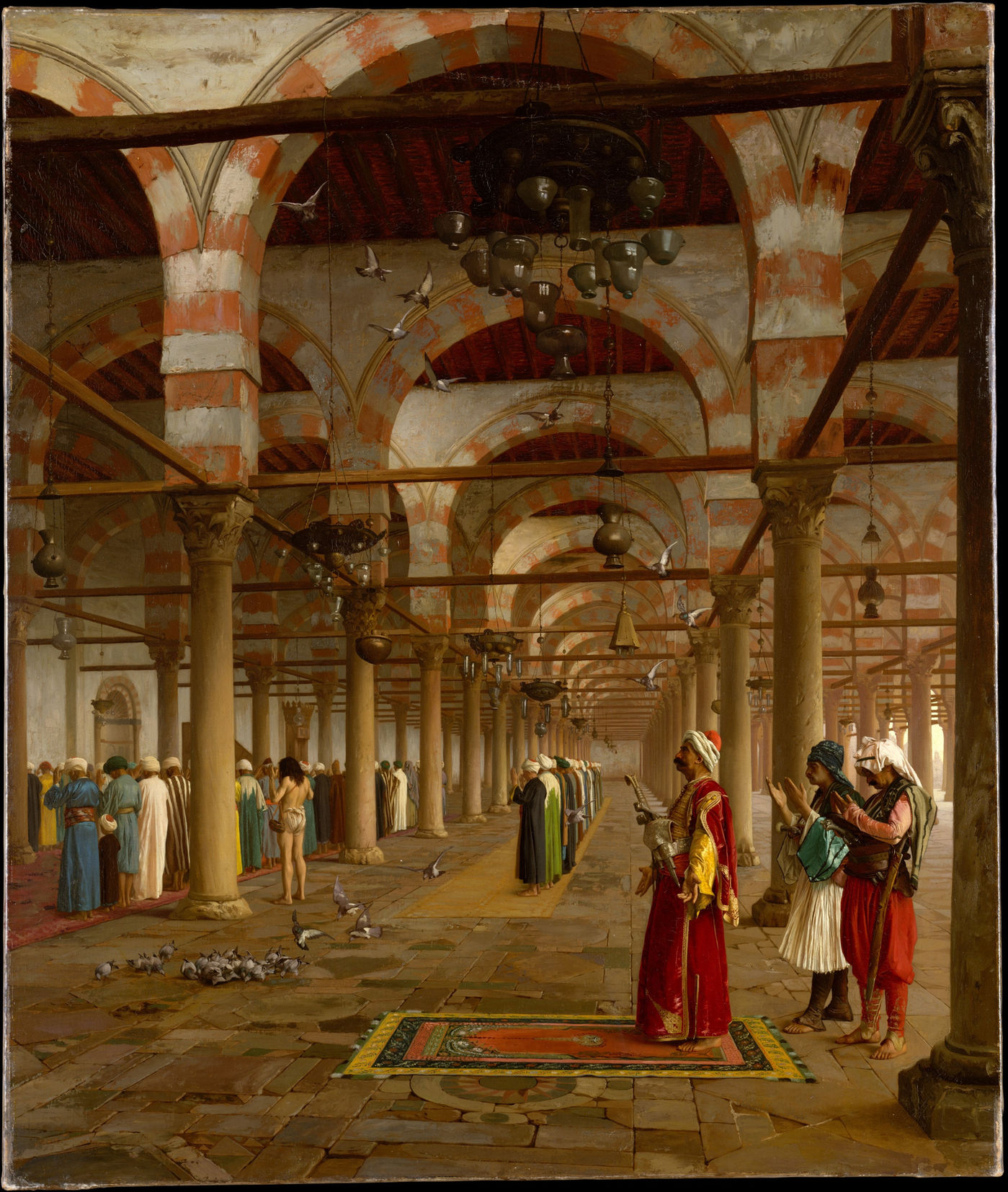
In practice, these motives are never found in pure form, and reducing information-gathering activity to a single motive would be misleading. One person could be at once a physician, a natural historian, and a member of an embassy. This is one of the most important patterns the catalog reveals.
How knowledge was collected and transmitted
The way knowledge was collected changed over time. In the sixteenth and seventeenth centuries, the principal instruments were the written travel account and the embassy report. The observer recounts what they see, often with the aim of introducing the Ottoman world to a European reader. These texts are descriptive and limited by the observer's access.
In the same period, visual classification developed as a second instrument. Nicolas de Nicolay's costume engravings, and later the Ferriol album, sorted the peoples, professions, and state officials of the empire into categories by way of dress. These albums are not innocent records of fashion. They are an attempt to make a society visible, countable, and classifiable. In the observer's hands, dress became a tool for reading identity.
The third instrument is the collection. Plants, seeds, herbarium specimens, coins, manuscripts, and copies of inscriptions were physically carried to Europe. These collections formed the core of European museums, botanical gardens, and libraries. The knowledge of a region was embodied in the objects uprooted and carried away from it.
The fourth instrument is the map. From Adam Olearius's seventeenth-century map of Iran to Heinrich Kiepert's nineteenth-century map sheets of Anatolia, cartography became ever more precise and ever more usable. The map is the most directly strategic product of the knowledge regime. It can march an army, lay a railway, draw a border.
The final instrument is photography. From the mid-nineteenth century onward, the daguerreotype and then the glass negative recorded the appearance of the Ottoman lands in unprecedented detail. Yet photography is not neutral either. Studio portraits in particular were staged with selected models, sets, and costumes. A frame titled "Turkish woman at home" was often set up in a studio.

Women and the recording of the private sphere
A distinctive dimension of this knowledge regime is the observation of women and of the private sphere. Male travelers could not enter spaces such as the harem, the hammam, and the home. This limit on access placed women writers in a special position. The letters of Lady Mary Wortley Montagu, Julia Pardoe's depictions of Istanbul, and Sophia Lane Poole's observations of Egypt recorded a world that men's texts could not reach.
To read these women's narratives merely as "harem narratives" would be incomplete. Henrietta Liston, an envoy's wife, became a diplomatic and social observer thanks to her access to Ottoman elite circles. Women observers on the one hand fed the curiosity of Western readers and on the other showed that knowledge about the private sphere, too, could be collected.
The political dimension of science
Botany, zoology, geology, archaeology, and cartography are, at first glance, neutral scientific disciplines. In the Ottoman lands, however, every one of these disciplines carried a political dimension. To record a region's vegetation is at the same time to come to know its soil, water, and climate. To map the geology of a mountain range is to know its passes and mineral deposits. Excavating an ancient city often ended with the finds being carried off to European museums.
The removal of the Pergamon Altar to Berlin and of the Xanthian Marbles to London are the most visible examples of this process. Archaeology is as much a practice of appropriation as it is a scientific activity. Similarly, Vital Cuinet's statistical work on the Ottoman provinces, by quantifying population and economy, turned the empire into an object that could be administered and intervened in.
The intelligence question and the four-tier framework
Framing this corpus as a whole as "intelligence activity" is an approach that is both productive and risky. It is productive because it makes visible the strategic value of the knowledge produced. It is risky because it carries the danger of erasing the difference between intention, mission, and outcome. Placing Busbecq, a Habsburg envoy, and Mark Twain, an American tourist, in the same category renders the concept meaningless.
The solution adopted in this essay is to place each observer in one of four tiers according to their proximity to the state and intelligence apparatus:
- Documented mission. Those sent by a state, an army, or an embassy with an explicit official assignment. Envoys, consuls, military advisers, and political agents belong to this group.
- State-sponsored expedition. Those who set out for scientific purposes but on government instructions and with government funding. Botanical and archaeological expeditions bearing the phrase "by order of the King" fall here.
- Indirect strategic contribution. Those who traveled for a private purpose, but whose maps, collections, route notes, or social analyses later acquired a military, commercial, or imperial function.
- Civilian observer. Travelers, writers, and artists without any official assignment, whose value is cultural and documentary.
These labels are not hard boundaries but a suggested way of reading. The same person may occupy different tiers at different periods of their life. Gertrude Bell is both an archaeologist and a political officer. The aim is not to pin a single label on everyone but to show the shifting distance between knowledge and power.
Orientalism and source criticism
While these texts and images offer valuable information about the Ottoman world, they also record the categories through which the West perceived the East. Headings such as "Turk," "Greek," "Armenian," "Kurd," "Arab," "Bulgarian," "Albanian," "dervish," or "harem woman" reflect not only social reality but also the observer's system of classification. The dress in some engravings is far removed from actual Ottoman clothing; the artist blended what they saw with the image of "the Turk" already available in Europe.

For this reason, the corpus should be read through three separate filters. The first is the observer's access: what they could see and what they could not enter. The second is the purpose of their mission: for whom and with what motive they wrote. The third is the ready-made categories into which they placed the people they represented. A travel account read without these three questions being asked becomes a document not of Ottoman reality but of the Western gaze.
How these works can be used today
Despite all these reservations, this corpus is an indispensable body of sources. These texts speak where the Ottoman archives are silent. The daily life of a city, the prices in a market, the details of a ceremony, the distribution of a plant are often recorded only in the notes of these outside observers. One must approach them with source criticism on the one hand and acknowledge the value of this record on the other.
The catalog below has been prepared in this dual spirit. Each entry briefly introduces the observer and their principal work, then places the observer within the regime of information gathering. The aim is both to offer the general reader a map and to leave the researcher a lasting reference text to which they can return.
Selected Names and Works
1. The fifteenth century: The first diplomats, pilgrims, and explorers
Bertrandon de la Broquière (d. 1459) — A nobleman in the service of the Duke of Burgundy. In Anatolia and the Balkans, which he traveled in the guise of a pilgrim, he gauged the strength of the Ottoman army and the condition of the roads, and wrote Le Voyage d'Outremer in a form that would supply route and force intelligence for a crusade. Documented mission.
Giosafat Barbaro (1413-1494) — A Venetian diplomat and merchant. Viaggi fatti da Vinetia alla Tana, in Persia follows the routes through the Black Sea, Anatolia, and Iran; the work also bears traces of the alliance that Venice sought to build with the Aq Qoyunlu against the Ottomans. Documented mission.
Ambrogio Contarini (1429-1499) — The envoy Venice sent to Uzun Hasan. His travel account conveys this diplomatic journey and the world of the Ottoman-Iranian frontier through the lens of the alliance-seeking of the time. Documented mission.
Arnold von Harff (1471-1505) — A German knight. On a journey undertaken as a pilgrimage, he observed the Balkans, Istanbul, and the Eastern Mediterranean; with the practical word lists he compiled, he left an early record of language and culture. Civilian observer.
2. The sixteenth century: The great observers of the Ottomans
Theodoro Spandounes (c. 1453-c. 1538) — A writer of Byzantine Greek origin raised in Italy. On the Origin of the Ottoman Emperors compiles, for a European reader, an account of the Ottoman dynasty, the organization of the palace, and the customs of the Turks; it reflects the perspective of someone who knew the empire closely. Civilian observer.
Luigi Bassano (c. 1510-c. 1570) — An Italian observer who lived in Istanbul. I costumi et i modi particolari de la vita de' Turchi conveys the customs, dining arrangements, and family life of the Ottomans with an attentiveness that reaches down to everyday detail. Civilian observer.
Benedetto Ramberti (1503-1546) — A Venetian humanist. He describes the organization of the palace and the state officials in Istanbul, where he went with an embassy delegation; he analyzes Ottoman administration with Venice's strategic curiosity. Documented mission.
Ogier Ghiselin de Busbecq (1522-1592) — The Habsburg envoy of Flemish origin sent to the court of Suleiman the Magnificent. Turkish Letters brings together observations on diplomacy, military organization, and court life; Busbecq is also foremost among those who carried tulip bulbs and manuscripts to Europe. Documented mission.
Hans Dernschwam (1494-1568) — A German-born agent of the Fugger trading house. His Istanbul and Anatolia diary records the prices, markets, and communities of cities including Ankara and Amasya with the meticulousness of a commercial accountant. Documented mission.
Pierre Belon (1517-1564) — A French natural historian. In the region he reached with France's embassy to the Ottomans, he studied plants, fish, and birds; Les Observations de plusieurs singularitez is one of the first major works of Levantine natural history. State-sponsored expedition.
Pierre Gilles (Petrus Gyllius, 1490-1555) — A French humanist and naturalist commissioned by King Francis I to collect manuscripts. De Topographia Constantinopoleos is regarded as the foundational work charting the historical topography of Istanbul. Documented mission.
Jean Chesneau (16th c.) — Secretary to the French envoy d'Aramon. Le Voyage de Monsieur d'Aramon recounts the embassy's route through Istanbul, Anatolia, and the Levant from the perspective of a diplomatic observer. Documented mission.
Jacques Gassot (16th c.) — A French traveler in the circle of the d'Aramon embassy. Le discours du voyage de Venise à Constantinople describes the Venice-Istanbul route and the conditions of the journey. Documented mission.
André Thévet (1516-1590) — A priest who served as cosmographer to the King of France. Cosmographie de Levant compiles an account of the Ottoman capital, religious life, and the societies of the Eastern Mediterranean from within the cosmographic tradition of the period. Documented mission.
Nicolas de Nicolay (1517-1583) — Geographer and cartographer to the King of France. In Istanbul, where he went with the d'Aramon embassy, he classified the peoples and state officials of the empire through costume engravings; Les quatre premiers livres des navigations et pérégrinations orientales is both a foundational visual catalog and a reconnaissance text. Documented mission.
Melchior Lorck (1526/27-c. 1588) — A Danish-German artist who came to Istanbul with Busbecq's delegation. He depicted the capital of Suleiman the Magnificent's reign, its soldiers, and its trades in engravings based on direct observation, leaving one of the most detailed visual testimonies of his time. Documented mission.
Thomas Dallam (c. 1575-c. 1630) — An English organ builder. He delivered the organ that the Queen presented as a gift to Mehmed III, and in his diary left a rare craftsman's testimony of the palace's inner world. Civilian observer.
Philippe du Fresne-Canaye (1551-1610) — A French traveler. Le Voyage du Levant describes Istanbul and Ottoman institutions with humanist curiosity. Civilian observer.
Salomon Schweigger (1551-1622) — A German Protestant clergyman who served as preacher to the Habsburg embassy. Ein newe Reyssbeschreibung describes the religious life of Istanbul and the communities of the Eastern Mediterranean, with an emphasis on observing confessional differences. Documented mission.
Reinhold Lubenau (1556-1631) — A German apothecary in the retinue of the Habsburg embassy. His memoirs record Ottoman cities, the palace, and everyday life with the detail of a long residence. Documented mission.
3. The seventeenth century: Court, society, trade, and religion
George Sandys (1578-1644) — An English poet and traveler. A Relation of a Journey Begun Anno Domini 1610 describes the religions and social life of Istanbul, Egypt, and Palestine with humanist curiosity. Civilian observer.
William Lithgow (c. 1582-c. 1645) — A Scottish adventurer. The Totall Discourse of the Rare Adventures recounts his long and arduous journey through the Balkans, Istanbul, and the Eastern Mediterranean as a personal testimony. Civilian observer.
Michael Heberer (c. 1560-1623) — A German traveler. Aegyptiaca Servitus conveys his years of captivity on Ottoman galleys and social life in Rhodes, Istanbul, and Egypt from a perspective from within and from below. Civilian observer.
Pietro della Valle (1586-1652) — An Italian nobleman. Viaggi records music, dress, and wedding and funeral ceremonies on his journeys from Istanbul to Iran; the relationship the author established with the Safavid court also lends the text a political dimension. Indirect strategic contribution.
Henry Blount (1602-1682) — An English traveler. A Voyage into the Levant treats Ottoman government and military structure in a cool-headed assessment that strives to keep clear of prejudice. Civilian observer.
François de La Boullaye-Le Gouz (1623-1668) — A French traveler. Les Voyages et observations covers a broad geography encompassing the Ottoman lands and Iran. Civilian observer.
Jean de Thévenot (1633-1667) — A French traveler. Relation d'un voyage fait au Levant relates in detail food, lodging, the hammam, and everyday life along a route extending from Istanbul to Egypt, Iraq, and Iran. Civilian observer.
Jean-Baptiste Tavernier (1605-1689) — A French dealer in precious stones. Les Six Voyages documents caravan routes, customs, and court consumption on the six journeys he made to Iran and India by way of the Ottoman lands; this information carries strategic as well as commercial value. Indirect strategic contribution.
Guillaume-Joseph Grelot (1630-c. 1680) — A French painter and traveler. Relation nouvelle d'un voyage de Constantinople depicts the architecture and mosques of Istanbul in detailed drawings based on measurement. Civilian observer.
Paul Rycaut (1629-1700) — An English diplomat who served as consul in Izmir. The Present State of the Ottoman Empire analyzes Ottoman administration, the ulema, the Sufi orders, and the military classes, and is regarded as one of the most influential reference works of its time. Documented mission.
Antoine Galland (1646-1715) — A French Orientalist. He collected manuscripts and coins on behalf of the embassy; his Istanbul journals reflect the embassy milieu, the book trade, and scholarly circles. Documented mission.
Jacob Spon (1647-1685) — A French physician and antiquarian. Voyage d'Italie, de Dalmatie, de Grèce et du Levant records the antiquities of Ottoman Greece with an early archaeological attentiveness. Civilian observer.
George Wheler (1651-1724) — An English traveler who journeyed with Spon. A Journey into Greece catalogs the region's plants alongside its ancient ruins, extending observation toward natural history. Civilian observer.
Cornelis de Bruijn (c. 1652-1726/27) — A Dutch painter. Reizen door de vermaardste deelen van Klein Asia depicts the cities and people of Anatolia, and Persepolis in particular, in engravings based on direct observation. Civilian observer.
Jean Chardin (1643-1713) — A jeweler and merchant of French origin. Voyages en Perse et autres lieux de l'Orient offers one of the most detailed European observations of Safavid Iran and also covers the Ottoman routes. Indirect strategic contribution.
Engelbert Kaempfer (1651-1716) — A German physician and natural historian. He first came to Iran with a Swedish delegation and then joined the Dutch East India Company; Amoenitates Exoticae treats Iranian plants, medicine, and Persepolis with drawings. Documented mission.
Adam Olearius (1599-1671) — The German-born secretary, mathematician, and cartographer of the delegation that the ruler of Holstein sent to Iran. His travel account contains an encyclopedic description of Iran and a map of the country far more accurate than any of its time. Documented mission.
Laurent d'Arvieux (1635-1702) — A French consul and court adviser. Mémoires, with its observations on Syria, Palestine, and the Arab tribes, served as a direct source for France's Levant policy. Documented mission.
Giovanni Francesco Gemelli Careri (1651-1725) — An Italian jurist and world traveler. Giro del mondo records his journey from the Ottoman lands to Asia as one of the rare individual world tours of the period. Civilian observer.
4. The eighteenth century: Scientific expedition, costume, and society
Joseph Pitton de Tournefort (1656-1708) — A French botanist who set out by order of the King. Relation d'un voyage du Levant records the Aegean islands, Anatolia, and the Caucasus, combining botany with observations of cities, dress, and everyday life. State-sponsored expedition.
André Michaux (1746-1802) — A botanist commissioned by the French government. He collected herbarium specimens and seeds across a wide geography including Aleppo, Baghdad, and Basra, and left his legacy mainly in his journals and collections. State-sponsored expedition.
Aubry de La Motraye (1674-1743) — A Protestant traveler of French origin. Travels through Europe, Asia and into Parts of Africa describes Istanbul, Crimea, and Anatolia, bearing witness to the Ottoman years of King Charles XII of Sweden. Indirect strategic contribution.
Lady Mary Wortley Montagu (1689-1762) — The wife of the British ambassador, and a writer. Turkish Embassy Letters, which conveys the hammam, domestic life, dress, and smallpox inoculation through a woman's eyes, is the foundational source in its field. Civilian observer.
Charles de Ferriol (1652-1722) — A French envoy. He commissioned the costume album of one hundred engravings depicting the communities and state officials of Istanbul, launching one of the most influential projects of Ottoman visual representation. Documented mission.
Jean-Baptiste Van Mour (1671-1737) — A Flemish painter. Through the costume and ceremony paintings he prepared for the Ferriol album, he became one of the principal sources of eighteenth-century Ottoman visual representation. Civilian observer.
Richard Pococke (1704-1765) — A British clergyman and antiquarian. A Description of the East and Some Other Countries documents the ancient geography of Egypt, Palestine, and Anatolia through systematic description. Civilian observer.
Jean-Claude Flachat (1700-1775) — A French merchant. Observations sur le commerce et sur les arts records Ottoman crafts, production, and material culture with a commercial eye. Indirect strategic contribution.
Alexander Drummond (d. 1769) — A British official who served as consul in Aleppo. Travels through Different Cities describes Aleppo, Cyprus, and Anatolia through commercial observations. Documented mission.
James Porter (1710-1786) — Britain's ambassador to the Sublime Porte. Observations on the Religion, Law, Government and Manners of the Turks offers a systematic assessment of Ottoman law and government. Documented mission.
Carsten Niebuhr (1733-1815) — A German mathematician and cartographer, the sole surviving member of the Royal Danish Arabia Expedition. Reisebeschreibung nach Arabien places its maps of Egypt, Yemen, and Arabia and its account of their social structure among the most reliable records of the period. State-sponsored expedition.
Peter Forsskål (1732-1763) — The Swedish-Finnish naturalist of the Danish Arabia Expedition. He gathered the plants of Egypt and Yemen for Flora Aegyptiaco-Arabica, thereby constituting an important part of the expedition's scientific legacy. State-sponsored expedition.
Claude-Étienne Savary (1750-1788) — A French Orientalist. Lettres sur l'Égypte conveys the everyday life and social structure of Egypt in a literary language. Civilian observer.
Volney (Constantin-François de Chassebœuf, 1757-1820) — A French thinker. Voyage en Syrie et en Égypte analyzes population, sects, and politics in a cool-headed manner; the work later also served as a source for Napoleon's Egyptian campaign. Indirect strategic contribution.
Choiseul-Gouffier (1752-1817) — France's ambassador to the Sublime Porte. Voyage pittoresque de la Grèce documents the antiquities and local society of the Aegean and Western Anatolia through illustrations. Documented mission.
Louis-François Cassas (1756-1827) — A French painter and architect. He depicted the monuments of Syria, Phoenicia, and Lower Egypt in detailed drawings based on architectural measurement. Civilian observer.
William Eton (late 18th c.) — A British observer. A Survey of the Turkish Empire assesses Ottoman politics, population, and military structure within a framework of decline. Indirect strategic contribution.
Antoine-Ignace Melling (1763-1831) — A German-French architect and painter who also worked for the Ottoman court. Voyage pittoresque de Constantinople et des rives du Bosphore constitutes the most detailed visual record of Istanbul, the Bosphorus, and palace life. Civilian observer.
James Dallaway (1763-1834) — A British writer who was physician and chaplain to the embassy. Constantinople Ancient and Modern describes the historical and social aspect of the city. Documented mission.
Thomas Thornton (1762-1814) — A British merchant who lived for many years in the Levant. The Present State of Turkey offers observations on Ottoman government and economy based on experience in the field. Indirect strategic contribution.
William George Browne (1768-1813) — A British traveler. Travels in Africa, Egypt and Syria records the routes through Egypt and Syria and the Saharan connections. Civilian observer.
Charles-Nicolas-Sigisbert Sonnini de Manoncour (1751-1812) — A French naturalist and officer. Voyage dans la haute et basse Égypte treats Egypt's nature, agriculture, and social life together. Indirect strategic contribution.
5. The nineteenth century: Social and literary observers
Henrietta Liston (1751-1828) — The wife of the British ambassador. Her Istanbul journal records the embassy milieu, the court elite, and women's lives from the perspective of a diplomatic observer. Documented mission.
Edward Daniel Clarke (1769-1822) — A British mineralogist and antiquarian. While describing the Balkans, Istanbul, and Anatolia in Travels in Various Countries of Europe, Asia and Africa, he also carried numerous antiquities to Europe. Indirect strategic contribution.
François Pouqueville (1770-1838) — Napoleon's consul general in Ioannina, at the court of Ali Pasha of Tepelena. His travel accounts of Greece and Albania report on the Balkan peoples and the Ottoman provinces within the framework of French interests. Documented mission.
John Cam Hobhouse (1786-1869) — A British politician. A Journey through Albania, written on the journey he undertook with Byron, describes Albania and the Ottoman Balkans. Civilian observer.
William Turner (1792-1867) — A British diplomat. Journal of a Tour in the Levant records Istanbul, Anatolia, and Egypt from the perspective of an observer attached to the embassy. Documented mission.
Robert Walsh (1772-1852) — An Irish clergyman who was chaplain to the British embassy. A Residence at Constantinople describes the city's neighborhoods, institutions, and everyday life. Documented mission.
Charles MacFarlane (1799-1858) — A Scottish writer. Constantinople in 1828 and Turkey and Its Destiny assess Ottoman politics and the provinces through a critique grounded in long observation. Civilian observer.
Charles Pertusier (1779-1836) — A French artillery officer. Promenades pittoresques dans Constantinople et sur les rives du Bosphore gives a spatial and social depiction of Istanbul and the Bosphorus; the author's study of the Dardanelles fortifications adds a strategic dimension to the text as well. Indirect strategic contribution.
Julia Pardoe (1804-1862) — A British writer. The City of the Sultan and Domestic Manners of the Turks treats domestic life in Istanbul, women, the hammam, and non-Muslim communities in detail. Civilian observer.
Adolphus Slade (1804-1877) — A British naval officer who later became adviser to the Ottoman navy (Mushaver Pasha). Records of Travels in Turkey, Greece describes the navy and military life from the inside. Documented mission.
Helmuth von Moltke (1800-1891) — A Prussian officer who served as a military adviser in the Ottoman army. Briefe über Zustände und Begebenheiten in der Türkei records Anatolia and the Kurdish regions through observations and maps of high reconnaissance value. Documented mission.
Charles White (1793-1861) — A British writer. Three Years in Constantinople documents in detail the city's institutions, trades, bazaars, and everyday life. Civilian observer.
Jean-Henri-Abdolonyme Ubicini (1818-1884) — A French writer. Lettres sur la Turquie analyzes the institutions, society, and finances of the Tanzimat era. Civilian observer.
Alexander William Kinglake (1809-1891) — A British writer. Eothen is an influential text that recounts a journey from the Balkans to Egypt in a subjective and literary voice. Civilian observer.
Alphonse de Lamartine (1790-1869) — A French poet and politician. Voyage en Orient offers a literary depiction of the East through Istanbul, Lebanon, and Palestine. Civilian observer.
Gérard de Nerval (1808-1855) — A French writer. Voyage en Orient transforms Cairo, Istanbul, and the Levant into a literary and cultural narrative. Civilian observer.
Théophile Gautier (1811-1872) — A French writer. Constantinople describes the city's streets, cemeteries, dervishes, and entertainments in a vivid style. Civilian observer.
Gustave Flaubert (1821-1880) — A French writer. His notes and letters from his journey to the East contain powerful but highly subjective and Orientalist observations on Egypt and the Levant. Civilian observer.
Edmondo De Amicis (1846-1908) — An Italian writer. Costantinopoli describes the multilingual, multi-communal urban life of Istanbul with close attentiveness. Civilian observer.
Pierre Loti (1850-1923) — A French naval officer and novelist. Aziyadé and his writings on Istanbul offer a literary and Orientalist imagining of the late Ottoman capital; despite his identity as an officer, his texts are literary rather than documentary in character. Civilian observer.
Mark Twain (1835-1910) — An American writer. The Innocents Abroad records Istanbul and the Holy Land through the sardonic gaze of an American tourist. Civilian observer.
6. Egypt, the Hejaz, Arabia, and Mesopotamia
Edward William Lane (1801-1876) — A British Orientalist. An Account of the Manners and Customs of the Modern Egyptians treats family, religion, entertainment, and trades as one of the classic works that come closest to field research. Civilian observer.
Sophia Lane Poole (1804-1891) — A British writer, the sister of Lane. The Englishwoman in Egypt conveys women's domestic life, weddings, and harem spaces from a vantage point inaccessible to men. Civilian observer.
Florence Nightingale (1820-1910) — The pioneer of British nursing. Her letters from her travels in Egypt address religion, health, and social life by way of historic sites. Civilian observer.
Amelia Edwards (1831-1892) — A British writer. A Thousand Miles up the Nile brought Egypt and archaeology to a wide readership; the author later led the way in founding the Egypt Exploration Fund. Civilian observer.
Richard Francis Burton (1821-1890) — A British officer, Orientalist, and agent. Personal Narrative of a Pilgrimage to Al-Madinah and Meccah recounts the pilgrimage he made in disguise; Burton also worked for British intelligence. Documented mission.
William Gifford Palgrave (1826-1888) — A British traveler and agent. Narrative of a Year's Journey through Central and Eastern Arabia records Central and Eastern Arabia within the framework of a political mission. Documented mission.
Charles Montagu Doughty (1843-1926) — A British poet and traveler. Travels in Arabia Deserta documents tribal law, poetry, and nomadism in northern Arabia in a dense and idiosyncratic language. Civilian observer.
Lady Anne Blunt (1837-1917) — A British traveler. Bedouin Tribes of the Euphrates and A Pilgrimage to Nejd record the tribes, horse breeding, and women's lives. Civilian observer.
Austen Henry Layard (1817-1894) — A British archaeologist and diplomat. Nineveh and Its Remains describes the excavations around Mosul, the local communities, and the tribes; the author later rose as far as the post of ambassador in Istanbul. Indirect strategic contribution.
William Francis Ainsworth (1807-1896) — A British physician and geologist who served as the scientist of the Euphrates Expedition. Travels and Researches in Asia Minor, Mesopotamia systematically surveys Anatolia, Kurdistan, and Mesopotamia. State-sponsored expedition.
Gertrude Bell (1868-1926) — A British archaeologist and political officer. The Desert and the Sown and Amurath to Amurath record the tribes and local politics of Syria and Mesopotamia; this accumulated knowledge later became the foundation of British policy in Iraq. Documented mission.
Max von Oppenheim (1860-1946) — A German diplomat and archaeologist. Vom Mittelmeer zum Persischen Golf examines the Bedouin tribes of Syria and Mesopotamia; the author, known as "the Kaiser's spy," is unmistakably an intelligence figure. Documented mission.
Alois Musil (1868-1944) — An Austrian-Czech priest and Orientalist. Arabia Petraea documents tribal geography, dialects, and nomadism; the author also undertook intelligence assignments on Austria's behalf during the First World War. Documented mission.
David George Hogarth (1862-1927) — A British archaeologist. A Wandering Scholar in the Levant surveys Anatolia and Syria; during the war, the author directed intelligence as head of the Arab Bureau in Cairo. Documented mission.
Mark Sykes (1879-1919) — A British politician. Through Five Turkish Provinces and Dar-ul-Islam describe the tribes and sects of Anatolia and Mesopotamia; the author's later role in Sykes-Picot calls for a particularly critical reading of these texts. Documented mission.
7. The Balkans, the peoples of Anatolia, and proto-ethnography
Ami Boué (1794-1881) — An Austrian geologist. La Turquie d'Europe gathers the geography, languages, peoples, and social structure of the Balkans into a comprehensive four-volume inventory. Indirect strategic contribution.
Johann Georg von Hahn (1811-1869) — An Austrian consul and Orientalist. Albanesische Studien is a pioneering study of the Albanian language, tribes, and folklore. Documented mission.
Guillaume Lejean (1824-1871) — A French geographer and ethnographer. Ethnographie de la Turquie d'Europe seeks to map the ethnic and linguistic distribution of the Ottoman Balkans; because the work reflects the nationalist categories of its time, it calls for a critical reading. Indirect strategic contribution.
Georgina Muir Mackenzie (1833-1874) and Adeline Paulina Irby (1831-1911) — Two British women travelers. Travels in the Slavonic Provinces of Turkey-in-Europe records Bosnia, Herzegovina, and the Balkan Slavs from the perspective of women observers. Civilian observer.
Felix Kanitz (1829-1904) — An Austro-Hungarian traveler. Donau-Bulgarien und der Balkan documents Bulgaria and the Danube basin with a distinctly ethnographic attentiveness; the work also reflects Habsburg interest in the region. Indirect strategic contribution.
Henry Fanshawe Tozer (1829-1916) — A British clergyman and traveler. Researches in the Highlands of Turkey records folk beliefs and local communities in Macedonia, Thessaly, and Epirus. Civilian observer.
Henry J. Van Lennep (1815-1889) — An American missionary. Travels in Little-Known Parts of Asia Minor documents Armenian communities, houses, dress, and religious life in Central and Eastern Anatolia. Civilian observer.
H. F. B. Lynch (1862-1913) — A British traveler and merchant. Armenia: Travels and Studies examines the area around Van, Bitlis, and Erzurum; the steamship company his family operated on the Tigris tied him to the region through commercial interest. Indirect strategic contribution.
Isabella Bird (1831-1904) — A British traveler. Journeys in Persia and Kurdistan records Eastern Anatolia and the Kurdish regions from the perspective of a woman traveler. Civilian observer.
Lucy Mary Jane Garnett (1849-1934) — A British folklorist. The Women of Turkey and Their Folk-Lore comprehensively compiles the folklore of Muslim, Greek, Armenian, Jewish, Bulgarian, and Albanian women. Civilian observer.
Edith Durham (1863-1944) — A British traveler. High Albania documents the tribal order, blood feuds, and customary law of northern Albania in one of the works that come closest to direct observation. Civilian observer.
Frederick William Hasluck (1878-1920) — A British archaeologist and scholar. Christianity and Islam under the Sultans examines shared sacred sites, Bektashism, and religious fluidity in Anatolia and the Balkans. Civilian observer.
Frederick Burnaby (1842-1885) — A British cavalry officer. On Horseback through Asia Minor records transportation, security, and provincial politics in Anatolia through a journey of high reconnaissance value. Documented mission.
Otto Blau (1828-1879) — A German consul and Orientalist. He produced travel and diplomatic works on Bosnia, Herzegovina, and the Ottoman Balkans. Documented mission.
8. Botany, zoology, geography, and the natural sciences
Guillaume-Antoine Olivier (1756-1814) — A French naturalist sent on a government mission to the Ottoman Empire, Egypt, and Iran. Voyage dans l'Empire Othoman, l'Égypte et la Perse is a six-volume work combining natural history with diplomacy and trade. State-sponsored expedition.
Jean-Guillaume Bruguière (1749/50-1798) — A French naturalist and Olivier's traveling companion. He contributed to the scientific achievements of the expedition with his zoological and natural history collections. State-sponsored expedition.
Pierre-Martin-Rémi Aucher-Éloy (1792-1838) — A French botanist. Relations de voyages en Orient contains the systematic plant collections he gathered in Anatolia, Iran, and Iraq; the author died of illness in Isfahan in the course of this pursuit. Civilian observer.
Theodor Kotschy (1813-1866) — An Austrian botanist. Through the research he carried out in Anatolia, Syria, and Egypt, he contributed important collections to the study of the region's flora. Civilian observer.
Edmond Boissier (1810-1885) — A Swiss botanist. Flora Orientalis is a five-volume systematic catalog bringing together the plants of the region stretching from the Balkans to the borders of Iran. Civilian observer.
Pierre de Tchihatcheff (1808-1890) — A Russian-French geographer. Asie Mineure offers a broad scientific survey covering the geology, vegetation, and population of Anatolia. Indirect strategic contribution.
Carl Haussknecht (1838-1903) — A German botanist. He gathered extensive plant collections in Anatolia, Syria, and Iran. Civilian observer.
August Grisebach (1814-1879) — A German botanist. Spicilegium Florae Rumelicae et Bithynicae classifies the plants of Rumelia and Bithynia. Civilian observer.
Eduard Rüppell (1794-1884) — A German naturalist. He carried out pioneering work on the zoology of Egypt, the Red Sea, and Northeast Africa. Civilian observer.
Georg Schweinfurth (1836-1925) — A German botanist and traveler. He studied the plant geography of Egypt, Sudan, and the Red Sea basin. Civilian observer.
George Edward Post (1838-1909) — An American missionary and botanist who worked at the college in Beirut. Flora of Syria, Palestine and Sinai is regarded as the foundational work of Levantine botany. Civilian observer.
Moritz Wagner (1813-1887) — A German naturalist and traveler. Reise nach Persien und dem Lande der Kurden records the Kurdish regions and Iran within the framework of natural history. Civilian observer.
Friedrich Parrot (1791-1841) — A German-Russian naturalist. Journey to Ararat recounts the first modern ascent of Mount Ararat and the physical geography of the region. Civilian observer.
Alfred Philippson (1864-1953) — A German geographer and geologist. He produced detailed studies on the geology and regional geography of Western Anatolia. Indirect strategic contribution.
Victor Guérin (1821-1890) — A French geographer. He systematically documented the historical geography of Palestine and Syria. Civilian observer.
9. Archaeology, cartography, and statistics
Charles Texier (1802-1871) — A French archaeologist and architect commissioned by the French government. Description de l'Asie Mineure documents the archaeology and historical geography of Anatolia. State-sponsored expedition.
William John Hamilton (1805-1867) — A British geologist. Researches in Asia Minor, Pontus and Armenia surveys the interior of Anatolia from a geological and geographical standpoint. Indirect strategic contribution.
Charles Fellows (1799-1860) — A British archaeologist. As a result of his travels and excavations in Lycia, he carried the Xanthian Marbles to the British Museum. Indirect strategic contribution.
Heinrich Schliemann (1822-1890) — A German archaeologist. He is known for his excavations at Troy and for Western Anatolian archaeology; he took part of the finds out of the country. Indirect strategic contribution.
Carl Humann (1839-1896) — A German engineer and archaeologist. He conducted the excavations at Pergamon and carried the Pergamon Altar to Germany. Indirect strategic contribution.
Georges Perrot (1832-1914) — A French archaeologist. He produced comprehensive studies on the art and archaeology of Anatolia. Civilian observer.
Charles Chipiez (1835-1901) — A French architectural historian. Together with Perrot, he prepared joint works on ancient architecture and the history of art. Civilian observer.
Heinrich Kiepert (1818-1899) — A German cartographer. He produced modern maps of Anatolia and the Ottoman lands; these maps were widely used for military and administrative purposes. Indirect strategic contribution.
Vital Cuinet (1833-1896) — A French statistician. La Turquie d'Asie is a detailed inventory that quantifies the population, economy, and administrative structure of the Ottoman provinces; the author worked for the Ottoman Public Debt Administration. Indirect strategic contribution.
Élisée Reclus (1830-1905) — A French geographer. Nouvelle Géographie universelle presents a physical and human portrait of the Ottoman lands within a broad framework. Civilian observer.
Claude Reignier Conder (1848-1910) — The British Royal Engineers officer who conducted the Palestine Exploration Fund's Survey of Western Palestine. This survey constitutes the most detailed topographical record of the region. Documented mission.
Edward Henry Palmer (1840-1882) — A British Orientalist. He studied the geography of Sinai and Palestine; he was later killed in Sinai while serving as a British agent. Documented mission.
Charles Warren (1840-1927) — A British Royal Engineers officer. He conducted the archaeological and topographical survey of Jerusalem on behalf of the Palestine Exploration Fund. Documented mission.
10. Painters, engravers, and photographers
Luigi Mayer (1755-1803) — An Italian-German painter. Views in the Ottoman Dominions depicts landscapes of the Balkans, Anatolia, and Egypt under the patronage of the British ambassador Ainslie. Documented mission.
Thomas Allom (1804-1872) — A British architect and painter. Constantinople and the Scenery of the Seven Churches of Asia Minor contains widely reproduced engravings of Istanbul and Western Anatolia. Civilian observer.
John Frederick Lewis (1804-1876) — A British Orientalist painter. He lived in Cairo for many years and brought everyday life to life in detailed and influential paintings. Civilian observer.
David Roberts (1796-1864) — A Scottish painter. The Holy Land, Syria, Idumea, Arabia, Egypt and Nubia depicts the region's monumental architecture and cityscapes. Civilian observer.
Émile Prisse d'Avennes (1807-1879) — A French draftsman and Orientalist. He recorded Egypt and Islamic art through detailed drawings and documentation. Civilian observer.
Georges-Jacques Gatine (c. 1773-c. 1831) — A French engraver. Costumes orientaux inédits presents, in plates, Ottoman and Eastern Mediterranean dress observed at the beginning of the nineteenth century. Civilian observer.
Jean Brindesi (c. 1826-1888) — A Levantine-Italian painter. Elbicei Atika: Musée des anciens costumes turcs de Constantinople documents old Ottoman military and civilian dress in the form of an illustrated catalog. Civilian observer.
Joseph-Philibert Girault de Prangey (1804-1892) — A French photographer. His early daguerreotypes of Istanbul, Egypt, and Palestine are among the oldest photographic records of the Ottoman lands. Civilian observer.
Maxime du Camp (1822-1894) — A French writer and photographer. Together with Flaubert, and on a government mission, he photographed the monuments of Egypt and the Levant. State-sponsored expedition.
James Robertson (1813-1888) — A British photographer. He is known for his photographs of Istanbul and Crimea; he also served as chief engraver of the Ottoman Imperial Mint. Civilian observer.
Felice Beato (1832-1909) — An Italian-British war photographer. With his photographs of the Crimean War and the Eastern Mediterranean, he is among the pioneers of early war photography. Indirect strategic contribution.
Francis Frith (1822-1898) — A British photographer. By producing and publishing photographs of Egypt and Palestine on a large scale, he shaped the visual image of the region. Civilian observer.
Félix Bonfils (1831-1885) — A French photographer. From his Beirut-based studio, he produced landscape and studio photographs of Syria, Lebanon, Palestine, and Egypt. Civilian observer.
Antonio Beato (c. 1832-1906) — An Italian-British photographer. He photographed Egyptian architecture and archaeological sites. Civilian observer.
Amadeo Preziosi (1816-1882) — A Maltese painter. Stamboul: Recollections of Eastern Life brings to life Istanbul's street vendors, coffeehouses, and occupational groups in watercolor. Civilian observer.
Joseph Schranz (1803-c. 1885) — A Maltese painter. He produced watercolor views of Istanbul and the Bosphorus. Civilian observer.
John Henry Haynes (1849-1910) — An American photographer. With his photographs of archaeological sites in Anatolia and Mesopotamia, he is counted among the pioneers of American field photography. Civilian observer.