

The conventional-attrition fallacy and cognitive paralysis
The assumption now widespread in public debate about the latest military campaign waged by the US-Israeli coalition against Iran, namely that the war will end once ballistic missile and unmanned aerial vehicle stockpiles are exhausted, contains a serious analytical gap when viewed from a security and intelligence perspective. This approach makes the error of reducing Iran's war doctrine to conventional firepower alone. Yet the tactical reality on the ground shows that a quantitative decline in missile capacity cannot be read as an indicator of surrender or of capability reduced to zero. On the contrary, this situation carries the potential to trigger a phase shift in the conflict, from a stage of kinetic attrition resting on intense conventional firepower toward a more dispersed asymmetric and irregular warfare stage that is harder to anticipate and to control.
The strike carried out in the first days of the war against a meeting attended by the state's most senior figures can be assessed, within classical Western military thinking, as a decapitation operation intended to produce cognitive paralysis. Developments on the ground, however, point to a different picture. Having prepared for a similar scenario after earlier conflict experience, Iran appears to have doctrinally accepted the mitigation of the first devastating blow by building redundancy into its command-and-control structure. Under the Islamic Revolutionary Guard Corps' (IRGC) mosaic defense approach, a structure has been created in which local units organized at provincial level can act independently within predetermined rules of engagement even when central communications are severed.
The picture that emerges within this framework shows that Iran, though targeted at its center, has displayed a flexibility capable of widening the geographic scope of the conflict rather than being driven into operational paralysis. Thanks to its decentralized structure, Iran has acquired the capacity to spread the war horizontally toward the Gulf region and global energy transit routes instead of confining it to a narrow front. The decline in conventional strike power therefore pushes Iran toward a strategy of converting its limited kinetic instruments into a multi-domain pressure tool rather than rendering it entirely ineffective. This carries the potential to produce more unpredictable consequences for the regional security architecture in the later stages of the conflict.
The capacity tender and Israel's dual-track paralysis strategy
Iran's vast geography makes it difficult for the Israeli air force to conduct a comprehensive campaign across the country. For this reason the US air force inventory has been brought into play. The most critical decapitation dimension of the operation is thus carried out by Washington with B-2 bombers and bunker-busting munitions such as the GBU-57 MOP, striking target sets spread across a wide geography.
This picture shows that a de facto division of roles has emerged within the operation. While Washington targets strategic command centers and heavily protected facilities, Tel Aviv pursues the broader target set in line with its own security priorities. Indeed, the strikes on Iran's oil and refinery infrastructure in Tehran and several other cities have been among the most visible examples of this divergence. The criticism that arose within the United States following these strikes revealed a certain tension between the two allies over operational priorities.
Put differently, Israel's insistence on targeting Iran's energy infrastructure despite US sensitivities regarding global energy markets and possible spikes in oil prices cannot be assessed as mere tactical discord. This approach points rather to a deliberate dual-track strategy. While the ideal outcome for Tel Aviv would be the complete collapse of the Iranian regime, the more realistic objective appears to be the paralysis of Iranian state capacity.
The intensive targeting of energy infrastructure, communications networks and internal security mechanisms aims at eroding state capacity from within rather than at physical occupation. An Iran whose infrastructure has been seriously damaged, whose security apparatus has been weakened and whose day-to-day administrative capacity has come under pressure will find it extremely difficult to project power on a regional scale. Israel's strategic approach therefore appears directed not at occupying Iran outright but at turning it into an actor compelled to focus on its own internal problems and with a narrowing regional reach.
The breaking of internal security and the logistics trap
The shift of the target set toward internal security and public order mechanisms in the later phases of the operation is not accidental. In many settlements across the country, above all in western Iran, IRGC bases, Ministry of Intelligence centers and especially Basij headquarters have been intensively targeted. This targeting logic points to a deliberate strategy aimed at weakening the regime's capacity to suppress a possible popular uprising and to maintain social control. That said, the failure of a social movement to emerge on the scale Washington anticipated, and the limited results of efforts to push Kurdish groups into the field, suggest that some of Washington's strategic assumptions have not matched the reality on the ground. Even so, the possibility that this destruction of security and control infrastructure may shape Iran's future domestic political dynamics should not be dismissed.
The widening of the target set toward energy infrastructure in the later days of the war shows that the conflict has also turned into a test of resilience and logistical capacity. In response to Israel's targeting of Iran's internal logistics and energy infrastructure, Tehran's answer has been to project the cost onto the global economy rather than keeping the conflict within its own borders. The effective disruption of navigation in the Strait of Hormuz, together with signals that regional energy facilities could be targeted, reflects the will of an actor under pressure in conventional terms to use asymmetric instruments of pressure as an element of escalation on a global scale. This dynamic raises the possibility that other critical maritime passages such as the Bab el-Mandeb corridor may also be drawn into a more unstable security environment in the later stages of the conflict.
Going underground and controlled escalation
The transformation over time of the high-intensity firepower of the war's first phase into a lower-tempo war of attrition is related less to the operational fatigue of coalition elements than to doctrinal realities on the ground. The principal reason for this change of momentum is that the high-value targets (HVT) long held in the coalition's intelligence pool, such as fixed radar stations, major air bases and command centers, were largely struck in the first days of the war. The removal of static targets has naturally carried the operation into a more complex phase. At this stage, the dynamic targeting process, which requires detecting concealed and mobile elements, comes to the fore.
In the same period, the systematic targeting not only of munitions stockpiles but also of Iran's mobile launch platforms (Transporter Erector Launcher / TEL) has markedly limited Tehran's daily salvo volume and its instantaneous launch capacity. This development has caused the tempo of the conflict to fall for both sides within the framework of military necessity.
In parallel, a reduction in the number of operations has also become inevitable. It is not possible for any modern military to sustain the intense firepower of the war's first days at the same level for months. Reloading munitions and the maintenance and refueling of platforms become a serious logistical burden under the pressure created by continuously operating unmanned aerial vehicles and combat aircraft.
This change of momentum can at the same time be assessed as a deliberate choice made by the parties within the framework of escalation control. The search for a rapid military result has given way to a longer-running struggle in which the parties aim to wear each other down over time. At this stage the dynamic of the conflict appears to have evolved from a high-intensity opening phase into a more calculated and incremental strategy of attrition.
Kinetic attrition projection: the tempo falls but the war does not end
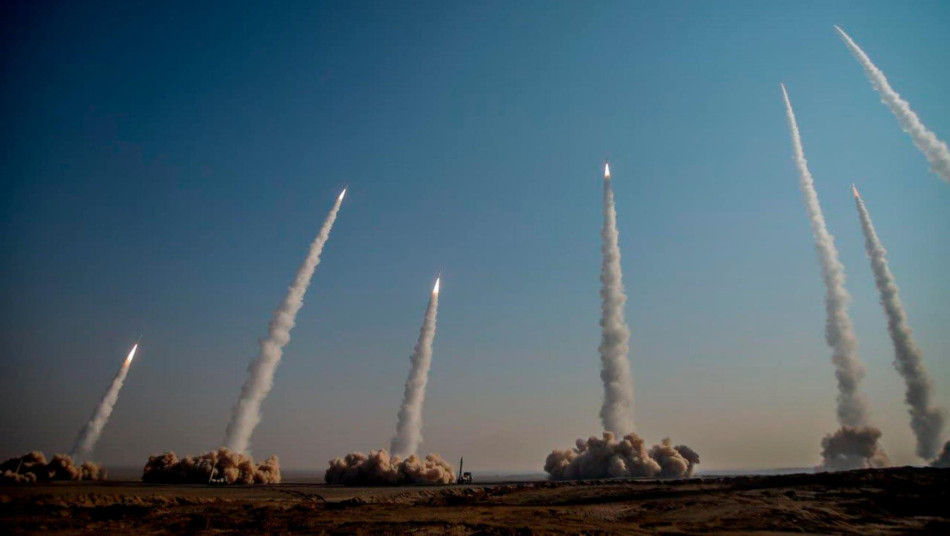
Although not at the intensity of the first days, missile salvos, kamikaze drone swarms and high-intensity kinetic clashes continue in the field. Nevertheless, the question increasingly voiced in international public debate, namely what Iran will do once these stockpiles are exhausted and whether it will surrender, rests on an assumption that misreads the logic of asymmetric warfare. The depletion of conventional munitions and the loss of launch platforms do not mean the war has ended. They only lower the tempo of the conflict and its daily kinetic intensity. The strategic reflex of a state whose energy infrastructure has been badly damaged, whose refineries have been struck and whose daily life has been severely disrupted is more often asymmetric radicalization, less costly but riskier, rather than surrender.
In this context, as Iran's munitions stockpiles decline, it can be expected to move away from a quantitative salvo-fire approach toward a more selective and longer-running asymmetric struggle. In such a scenario three basic military options come to the fore for Tehran. First, to widen the theater of conflict through proxy actors and generate pressure across different fronts. Second, to create economic and political cost by increasing pressure on maritime trade and energy lines in the Gulf region. Third, rather than expending its most advanced missile capacity in daily tactical attacks, to use it more sparingly and reserve it for targets capable of producing high strategic effect. For actors whose room to lose is narrowing in particular, a cost-generating strategy can be pursued through more selective but more jarring moves. This indicates that strategic risk may rise even as military intensity declines in the later phases of the conflict.
Secondary fronts move to center stage and global blackmail
The fastest way to compensate for the falling tempo of conflict at the center is to widen the geography of the war and carry it to regional chokepoints. Such horizontal escalation is one of the most effective means, for an actor whose conventional firepower is weakening, of spreading the cost across a wider international environment. This will also be Tehran's basic reflex. At the point where it cannot balance military pressure directly at the front, it will carry cost generation to the regional and global scale.
At this stage, although they have taken serious blows and been considerably weakened as of 2026, the reactivation of Iran-linked actors such as Hezbollah, the Popular Mobilization Forces and the Houthis is probable. Bringing these elements more actively into the field could lead to a widening of regional instability. In particular, when the Houthis' turn toward de facto intervention in the Bab el-Mandeb Strait and the pressure that Iran's naval elements, mobile coastal batteries and mining capacity can create around the Strait of Hormuz come into play simultaneously, the resulting security risk could affect global energy flows and supply chains alongside military actors.
For this reason a decline in the tempo of the war does not mean that tension in the field has eased. As conventional missile salvos decrease, the conflict may continue through different instruments. In particular, the rising security risks of critical maritime passages such as Bab el-Mandeb and Hormuz may mean their conversion into instruments of geopolitical pressure. The message to be delivered from Tehran's standpoint can be read within this framework. When critical infrastructure inside the country comes under heavy pressure, the regional economic order can be rendered equally unstable.
In conclusion, the decline in missile capacity shows not that the war has ended but that the conflict has changed form. This new phase, in which conventional intensity has fallen, the tempo of coalition bombardment has dropped and the cost has been spread across a wider area, points to a lower-intensity but higher-risk stage. In this phase the conflict may advance through regional networks rather than along a front line, and the tendency toward horizontal spread seen since the beginning of the war may become more pronounced.
This article was first published in IRAM on March 14, 2026.