
The 60-day period stipulated in the Islamabad Accord, signed on June 17 with Pakistan’s mediation, expired in recent weeks. That date concerns the expiry of the period allotted for negotiations rather than the end of the ceasefire. Broadly, the text envisaged the United States and Iran reaching a final agreement within no more than 60 days. During the same period, it required Iran to provide commercial vessels with free and safe passage and the United States to lift its naval blockade. In other words, what expired was not, in general, the duration of the ceasefire but the expectation that the provisional accord could become a lasting arrangement.
The failure to implement the accord, however, is no surprise. Washington read the text as a transitional instrument that would restore the Strait of Hormuz to the freedom-of-navigation arrangements in place before February 28. Tehran, by contrast, regarded the same text’s reference to “future management and maritime services” as the beginning of a new order recognizing its role over the strait. The parties thus interpreted the agreement differently from the outset. Moreover, the accord’s ninth article stipulated that Washington would impose no new sanctions until a final agreement was reached. The August 24 package showed that the United States no longer regarded the June 17 framework, including that provision, as a binding basis for transition.
Washington’s new war
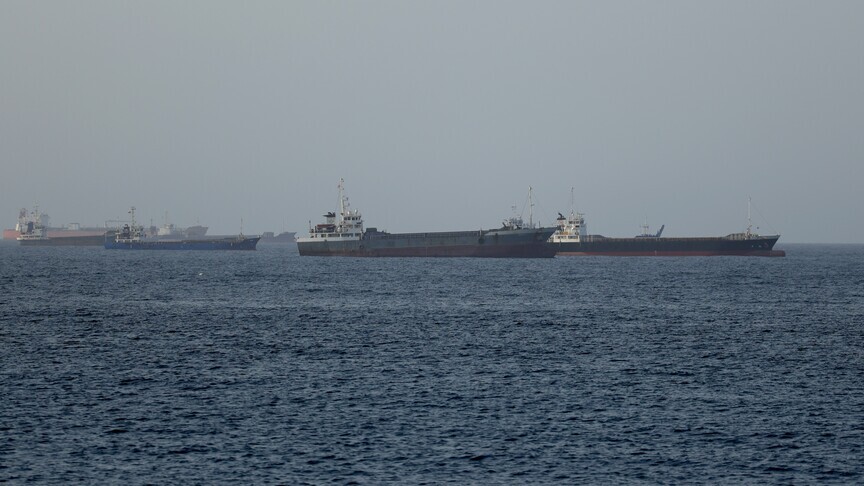
For the United States, the war’s center of gravity has shifted. An operation launched in February with objectives such as dismantling the nuclear program and bringing down the regime turned, six months later, into a struggle to secure regular flows through Hormuz. Direct attacks gave way to mine clearance, protected passage through corridors off Oman’s coast, and a blockade of Iranian ports.
Washington says it is in no hurry to negotiate and effectively regards the June 17 text as superseded. This should not, however, be interpreted as meaning that the military option has disappeared altogether. Rather, it indicates that the methods of pressure and warfare have changed form. Indeed, the United States resumed its attacks on Iran on the evening of September 1. In its attacks on Iran, US Central Command (CENTCOM) targeted, in particular, the area around the Strait of Hormuz and the country’s southern regions.
It is still too early, however, to say whether these attacks will remain limited, like previous ones, or turn into an all-out assault. By making the strait operational without Iran’s consent, the United States is trying to erode Tehran’s strongest bargaining chip and, through new sanctions, enter the next round of negotiations from a stronger position. This can be read as a policy of managing the war at lower intensity rather than a policy of peace.
Tehran, for its part, regards its survival and its position in Hormuz as strategic gains in themselves. Yet time is working against Tehran, both because of the current state of “neither war nor peace” and because of the severe destruction of infrastructure during the war, collapsing oil revenues, and the deepening cost-of-living crisis. Even so, this does not mean surrender.
Iran’s talks with Oman indicate a search for an arrangement that would distribute commercial passage between Iranian and Omani waters while excluding warships. An Iranian parliamentary committee’s advancement of a bill envisaging maritime and security service charges for vessels from “permitted countries” is the domestic legal component of the same objective. Tehran wants not merely to close the strait but to become the authority deciding who may pass and on what terms.
Iran’s leverage is not unlimited, however. If the American corridor becomes permanent and Gulf producers join it, Tehran’s de facto control will weaken. This is Iran’s dilemma. Keeping the strait closed generates pressure; but the longer that pressure continues, the more it also accelerates the institutionalization of an alternative order.
Rupture and divergence in the Gulf
Tensions in Gulf-Iran relations have visibly increased recently. The United Arab Emirates’ (UAE) suspension of all commercial and financial transactions with Iran is more than a political response. The UAE was one of Iran’s largest gateways for imports and a principal hub through which it accessed payment channels under sanctions. The closure of this route represents a serious economic loss for Tehran.
Nevertheless, the Gulf is not pursuing a single policy. While Oman negotiates the strait’s future with Iran, Qatar condemns Iranian attacks but tries to keep the Washington-Tehran channel open. These positions may appear contradictory, but they arise from a shared concern. Gulf capitals do not want Iran to turn the Strait of Hormuz into an instrument of pressure. At the same time, they know they would be the first to pay the price of a new military escalation.
Missile and drone attacks on countries hosting US bases have also eroded confidence in Washington’s security umbrella. Mediation is therefore less an attempt at rapprochement with Iran than an effort to compensate for a defensive shortfall through diplomacy. What is taking place, then, is not so much a collective rupture with Iran as different strategies of protection against the same threat.
The limits of sanctions
The sanctions package the United States announced against Iran on August 24 targets digital assets, technology, gold, aviation, and shipping. It lists approximately 60 individuals, entities, and vessels and broadens the threat of excluding third-country companies that work with Iran from the dollar system.
This pressure is not insignificant in an economy where the rial has depreciated substantially against the dollar on the free market and the International Monetary Fund’s (IMF) July update projected a 5.4 percent contraction and 68.9 percent inflation for 2026. Especially with the closure of the UAE channel, flows of imported inputs, spare parts, and payments will become even more difficult for Iran. Indeed, reports in Iranian newspapers also indicate substantial increases in spare-parts prices and labor costs.
Economic damage and political concessions, however, are not the same thing. Iranian oil is already under blockade, while sanctions-evasion networks rely heavily on China. The package’s success depends on how far Washington can compel Beijing and Iran’s neighbors to enforce it. The new package will therefore be tested more by the capacity to implement it than by its scope. Moreover, instead of strengthening advocates of negotiation, the pressure may feed Tehran’s siege narrative and make the pursuit of revenue from Hormuz more vital.
Israel has not, for now, visibly opened a new front in Iran. But it has not abandoned its objective of degrading Iran’s military, technological, and economic capacity over the long term while creating a fragile state that continually generates instability. Tactical gains have not translated into regime change, while the erosion of political support within the United States has raised the cost of opening a new front. The current quiet is therefore more a repositioning of the parties than a lasting peace.
The key indicator in the coming period will be not an announcement of negotiations but whose rules govern regular passage through Hormuz. Passage with Iran’s permission and for a fee would turn Tehran’s military loss into political authority. Making the US corridor permanent and free of charge would neutralize that leverage. Nevertheless, the possibility of a major conflict can never be ruled out.
This article was first published on September 2, 2026, by Anadolu Ajansı.