

The Iran–Israel conflict has remained on the agenda throughout the past year. The sequence of events that began with Operation Al-Aqsa Flood became more complicated with attacks by Iran-backed Houthi militias in Yemen. Following these developments, a series of Israeli strikes in December killed Islamic Revolutionary Guard Corps (IRGC) commander Seyyed Razi Mousavi. Israel’s attack on Iran’s embassy in Damascus took the tensions to another level, and Iran responded to the strike on its diplomatic mission by directly attacking Israel. Although the attack did not inflict heavy losses on Israel in practical terms, it was significant because it was launched directly from Iran.
Iran also faced a busy domestic political agenda during this period. While Iran struggled with numerous problems, from the housing crisis to water shortages, parliamentary elections were held in two rounds in March and May. Exactly nine days after the second round on May 10, Iranian President Ebrahim Raisi—a major figure in Iranian politics who was considered a future Supreme Leader—and Foreign Minister Hossein Amir-Abdollahian died when their helicopter crashed. Iran thus entered another election period.
The presidential election brought some particularly interesting developments. Although many prominent figures applied to run, the Guardian Council approved only six candidates. Alongside leading conservatives such as Mohammad Bagher Ghalibaf and Saeed Jalili, those approved included Masoud Pezeshkian, whose candidacy the council had previously rejected. After an election campaign full of surprises, Pezeshkian became Iran’s new president. His decision to task former Foreign Minister Javad Zarif, a frequent target of political criticism particularly from conservatives, with forming his cabinet sparked controversy. When the time came for his inauguration, Pezeshkian took the oath and assumed office before his new cabinet had been announced. That night, Ismail Haniyeh, the leader of Hamas’s political wing who had been invited to the ceremony, was assassinated in the room where he was staying in Tehran.
What Messages Was Israel Seeking to Send?
Haniyeh’s killing was more than an assassination: it was a multilayered message Israel intended to send to the region, and especially to Iran. Haniyeh was a prominent figure on the “kill list” Israel had previously made public. Carrying out the assassination on Iranian soil heightened its symbolic significance. First, Israeli decision-makers had long stressed that all groups in the region should distance themselves from Iran, distrust it, and end their cooperation with it. Many Israeli social media accounts also presented the killing as “a consequence of growing closer to Iran.”
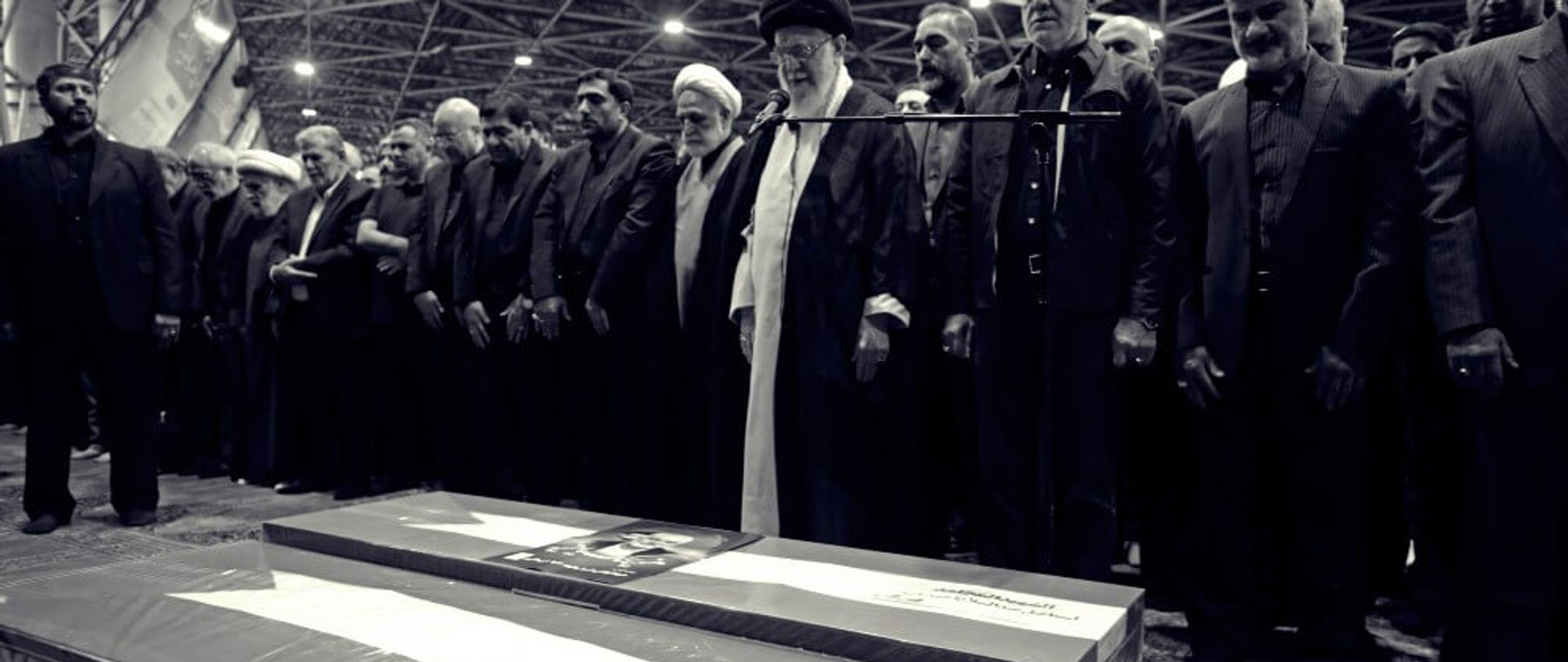
Another aim was to gain a psychological advantage by portraying Iran as a country “unable to protect its guests even on its own soil.” The incident exposed weaknesses in Iran’s security infrastructure and dealt a serious blow to its deterrence. Members of the “Resistance Front” who attended Ebrahim Raisi’s funeral had held a two-day meeting. After this assassination, another meeting of that kind will no longer be possible with the same degree of openness. The timing was particularly important. Carrying out the operation after a ceremony attended by international guests can be interpreted as an attempt by Israel to reassert its deterrence. It may have been intended to reinforce the perception that Iran is unsafe by conveying an indirect threat to those attending.
Haniyeh’s central role in conducting peace talks is another important dimension of the incident. Targeting someone responsible for peace negotiations offers clear indications of Israel’s approach to the peace process. The operation also sends numerous other messages: that Israel has no desire for peace or a cease-fire, that it is determined to continue its actions, and that it is not deterred by the prospect of heightened tensions with Iran.
Finally, the nature of the assassination strengthened suspicions that Ebrahim Raisi’s death had also been an assassination. An operation carried out against a senior figure such as Haniyeh with almost “surgical” precision could conceivably have been conducted against Raisi’s helicopter as well. Many questions about Raisi’s crash remain unanswered, and Iranian officials have shared details of neither Haniyeh’s assassination nor the helicopter crash.
How Might Iran Respond?
The Iranian press suggests that, from the outset, Iranian elites have viewed all these events as a trap designed to prevent the country from attaining nuclear capability. Iran knows that acquiring nuclear weapons technology would give it a form of immunity. Until it gains that immunity, it is responding to these attacks with as little force as it can. Iran will respond to this attack, too, but will do so in a way intended to avoid war. It did not immediately respond to the attack on its embassy in Damascus either; after a period of propaganda, it retaliated with a direct, albeit low-intensity, attack on Israel. Its reaction this time could be similar. It might also attempt to respond through its network of proxy forces. Yet, given both its strategy of avoiding war unless directly attacked and its belief that it must remain patient until it achieves nuclear capability, it appears quite likely that Iran’s response will be less severe than the expectations it has raised.
Ultimately, by assassinating Haniyeh, Israel delivered a blow that seriously damaged Iran’s credibility, deterrence, and national honor. Iran needs distinct strategies to restore each of these. It may seek a forceful response to rebuild its “charisma” and its ability to exert pressure over other groups on the ground, or it may diversify its response over time.
This article was first published in Perspektif on August 4, 2024.