


Unfortunately, apart from a handful of respected researchers and journalists, few people in Türkiye know much about Iran’s internal dynamics and structure. So unfamiliar are many with the country and its people that they think Arabic is its official language... That subject deserves a separate article and will not be explored here.

Our many historical commonalities with Iran, and Iranians’ strong interest in learning Turkish for various reasons, give Türkiye a substantial advantage in language teaching. Before discussing that, we need to consider who learns Turkish in Iran. First, however, this is a collection of personal experiences rather than an academic study. It may therefore contain mistakes and should not be treated as an academic work.
Iranians’ Attitudes Toward Turkish and Türkiye
Broadly speaking, Iranians know us and our internal dynamics well and follow Türkiye closely. They follow Turkish celebrities on Instagram and other platforms. Diaspora satellite channels such as Manoto TV produce programs about Turkish celebrity news; Iranians film series in Antalya and travel to Türkiye for duets with singers such as Küçük Emrah. Numerous Telegram groups and channels share photographs and information about Türkiye and Turkish. Clothes, shoes, jewelry, cosmetics, and other items are also sold to Iranian women through social media, whose pages they follow avidly. Some come to Türkiye solely to shop, taking bag after bag of goods and clothing home from malls in major cities.

A Duet by Shayad and Emrah

İbrahim Tatlıses discusses a false report about him in Iranian celebrity media and wishes Iranians a happy Nowruz.
The other side of the coin is that these information sources are not always reliable. For many Iranians, social media and satellite broadcasts are their sole and principal sources about Türkiye, allowing misinformation to circulate and various prejudices to form. Although these differ by worldview and social circle, every group has prejudices or
misconceptions about Türkiye. The most common, especially among middle-aged and older Iranians, is that “Türkiye has lost its culture, or has none, whereas Iran lives its culture intensely and possesses a civilization.” Often called the war generation because of the devastating eight-year Iran–Iraq War, this group can be described as particularly sensitive and proud on national matters. Iranians follow Türkiye mainly through television dramas, and many therefore believe life there resembles what they see on screen. Those who assume the public regards the dysfunctional relationships and lifestyles in these dramas as normal, and that their stories reflect ordinary lives, adopt this view.
Another misconception is that Türkiye is at war. Particularly during periods of frequent ISIS and PKK attacks, people believed a war was underway and the country was unsafe. Even so, everyone with the means continued to visit.
For the younger generation, who did not experience the Revolution or war or were born afterward, things are very different. Whatever their politics, they know about developments worldwide and follow them closely. Many appear apolitical, but express a worldview of their own in private conversations and Telegram and Instagram posts.
Profiles of Students in Iran
First, contrary to what many in Türkiye assume, the Islamic Republic of Iran is not a Persian state consisting only of Persians. It contains many ethnic and religious communities, with Iranian identity serving as an overarching identity. We are therefore discussing not a monolithic nation but numerous communities brought together in the melting pot of “Iranianness.” Interest in and expectations of Turkish vary by region, age, and profession. Historical factors, trade relations, television, politics, and other reasons draw very different groups to study it, creating diverse needs, particularly for teaching materials. Although demand seems to generate its own supply, considerable fraud and exploitation of people’s hopes are involved. Turkish teaching is mostly in the hands of Azerbaijani Turks. Setting aside the valuable but relatively few competent teachers, these individuals invariably deceive locals by claiming that one parent is from Türkiye and the other Iranian, and that growing up in Iran through their Iranian parent gave them command of both languages. Yet because their Turkish is not proficient, they teach a mixture of Azerbaijani and Turkish. Students learn Azerbaijani suffixes, words, and structures as though they were standard Turkish, and some become disillusioned when they later realize this.
A substantial group wants to study in Türkiye before pursuing master’s degrees and doctorates in Europe or America. Studying in Türkiye also carries prestige, encouraging students to learn Turkish in order to come. Knowing nothing about the country, however, they are vulnerable to deception. Companies claiming to advise them demand up to 15,000–20,000 lira, sometimes 40,000–50,000, promising preparation and admission to Turkish universities. Without fully understanding the YÖS foreign-student examination or universities’ individual systems, they seriously misdirect students, costing them money and time. This inevitably obstructs qualified people who might otherwise come.
Another group consists of businesspeople and those planning business activities. They generally want only enough Turkish for trade and sometimes reject general courses in favor of business Turkish. As discussed below, the absence of resources or curricula for business Turkish—and, one might add, the desire for higher revenue—leads companies to direct them mainly toward private lessons. A business Turkish program in Iran would attract substantial interest, but institutions and teachers generally lack the necessary infrastructure, making such a program difficult in the medium term.

Another sizable group consists of those with a general interest in Turkish. There are several subgroups: viewers who want enough Turkish to understand television dramas, for whom materials or courses could analyze common expressions and words; people wishing to leave their environment in Iran and live in Türkiye; and those learning for intellectual reasons, who generally already speak several languages well.
Unfortunately, teaching materials present a discouraging picture. Almost all are produced by local Azerbaijani Turks and have serious methodological weaknesses, alongside substantial grammatical and spelling errors. It could be said that not a single book is free of major errors. If one exists beyond the sources we examined and I overlooked it, I exclude it from that judgment. Because foreign copyright is not enforced in Iran, many books and software packages are available as pirated copies. Rosetta Stone language programs sold for around 600 lira can be bought in Tehran for 25,000 tomans, approximately 22 lira. Pirated copies of Mehmet Kanar’s well-known Turkish–Persian and Persian–Turkish dictionaries are sold everywhere, still riddled with spelling errors despite being copies. Apart from one or two exceptions, it is difficult to identify other dictionaries.
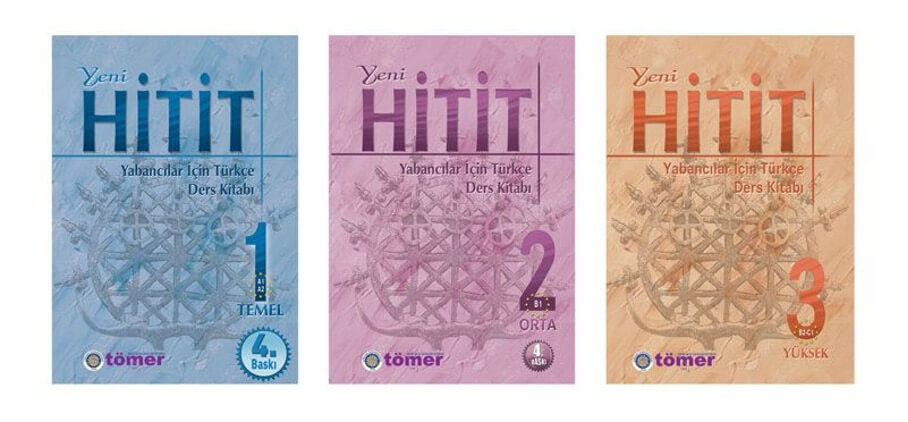
The best-known resource for teaching Turkish in Iran is Yeni Hitit, produced by Ankara University’s Turkish Teaching Center. Like other books, it is pirated, so print quality varies. Prices range from 50,000 to 70,000 tomans. More remarkably, language institutes themselves reproduce it illegally and sell it at enrollment for 20,000–25,000 tomans, earning money from both registration and books. This is not unique to Turkish: the same applies to publications for almost every language, from English to German, including well-known resources such as Barron’s TOEFL books.
As noted, Iranians learn Turkish for education, commerce, and general interest in Türkiye, each requiring different materials. Substantial demand exists, and addressing it through competent specialists would benefit both Türkiye and Turkish. Even a simple storybook or set of language flashcards is impossible to find.
The Yunus Emre Institute is well known in Iran and its activities are closely followed. Some Iranian teachers introduce themselves as institute instructors and print business cards bearing its logo, using its prestige to recruit students and charge more. The institute is practically equated with the Turkish embassy, and studying there is considered prestigious in some circles. Private institutions nevertheless hold the largest market share.
Although teaching follows textbooks and uses the target language directly, practice sometimes requires departing from the rules. A few practical observations about Turkish and Persian can be a lifesaver. Without attempting linguistic analysis, it can help to discuss commonalities using a few simple observations that should not be taken as general rules—and may occasionally even be inaccurate. Sometimes the easiest way to reach an Iranian learner is to show connections between their language and Turkish. This improves comprehension and gives the teacher authority through familiarity with the student’s language and culture. Iranians respect such scholarly knowledge and attach importance to it. Discovering these details can also renew a student’s confidence.
To give a few examples, Turkish and Persian share many proverbs and idioms. Beyond words borrowed in either direction, historical factors mean that the ways Arabic loanwords are used in both languages often overlap. Many Arabic constructions used with Turkish “etmek,” for example, take Persian “kardan,” which has the same meaning: “sohbat kardan” and “sohbet etmek,” meaning to converse; “arz kardan” and “arz etmek,” meaning to submit or present. Caution is needed, however: Persian has so many constructions with “kardan” that students may assume all work identically in Turkish. Unless this can be explained very clearly, it may be better to withhold the comparison and let students discover it over time.
Another small detail is that the occupational suffix “-çı” survives in Persian words such as “postchi,” meaning a postal worker. Pointing this out at an appropriate moment can positively affect students’ attitudes toward Turkish and Turkish people. Occasionally highlighting words such as “otagh”—room, from old Turkic “otag”—or “chaghu”—knife, related to Turkish “çakı”—has a similar effect.
Another issue is sound changes in shared words. In Turkish, Persian /o/ in these words has become /u/ or /ü/: “motashakkeram–müteşekkirim,” “donya–dünya,” and “gol,” meaning flower, versus “gül.”
Conversely, because sounds such as /ü/, /ö/, /ı/, and /ğ/ are absent from Persian, Iranians struggle to recognize, write, and pronounce them. Extra exercises may be needed to distinguish them. Having learned Latin letters through English, students experience considerable confusion at A1 and A2 levels.
Used sparingly and appropriately, all these observations can sometimes be a lifesaver in class. At the least, teachers’ familiarity with them offers clues to where students may struggle and produces valuable intercultural results.
Conclusion
Iran has an enormous market for Turkish teaching, and Iranians genuinely want to learn. Yet their goodwill and hopes for their lives are exploited by unqualified people. Teaching materials also pose a serious problem: they have no useful resources for teaching Turkish, while the materials they do have are full of mistakes. There are many answers to what might be done. One thing, however, is clear: developing work for the substantial number of Turkish enthusiasts among the citizens of our neighbor—a country of eighty million with which we trade intensively—would benefit Turkish, Türkiye, and bilateral relations with Iran.