

By capturing Algeria on July 5, 1830, after Napoleon’s era, France acquired its first colony along the North Africa–Middle East axis. It had imported substantial quantities of food from Algeria. Although it subsequently took control of Tunisia and Morocco, France could not establish a military presence in the Middle East until the end of World War I, gaining supremacy primarily on North Africa’s outer edges. Britain held economic sway over Iran and divided it into spheres of influence with Russia. (Cleveland, 2008) It is therefore difficult to speak of a French military presence in the Middle East outside North Africa before 1920. Economically and culturally, however, it remained present through the capitulations, students sent to France, and missionary activities discussed in the previous article.
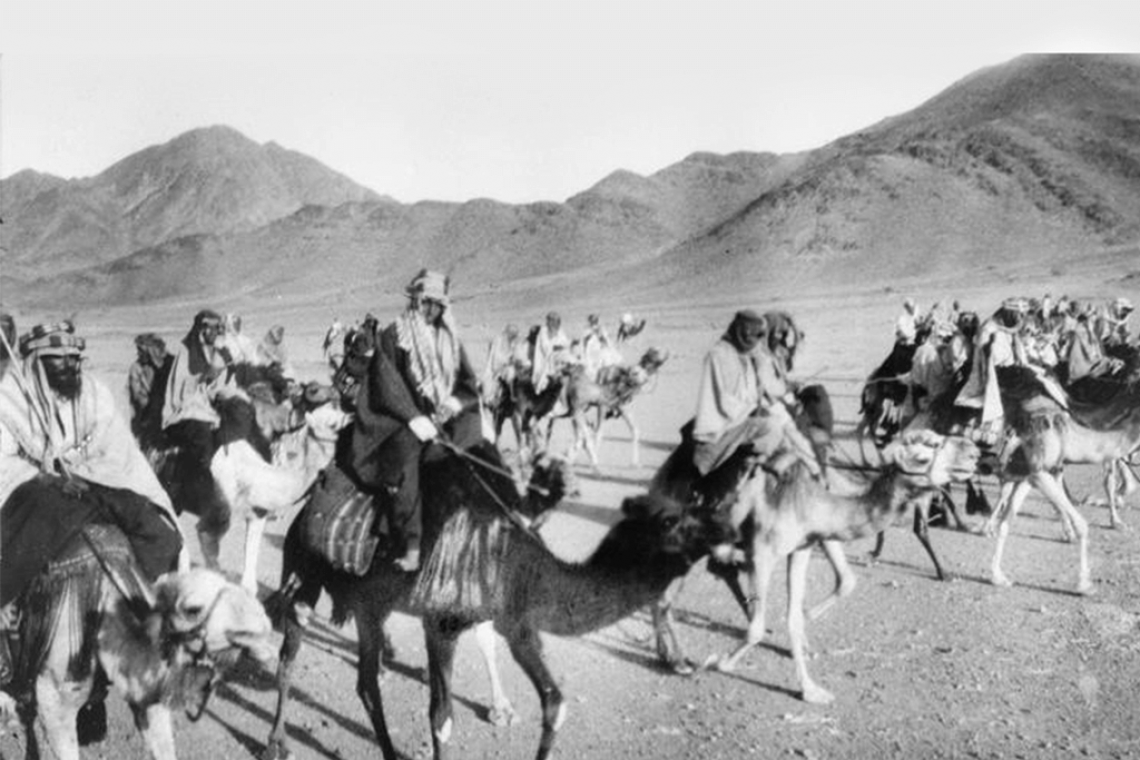
After 1920, France, one of the war’s victors, established a mandate administration—Mandat Français en Syrie—covering Lebanon, Hatay, and Syria, in accordance with the Sykes–Picot division. It also occupied Çukurova and the Harran region, but withdrew under the 1921 Ankara Agreement after local resistance and Turkish military victories against Greece. After the long interval following the Crusades, France thus entered the Middle East militarily for the first time.
Unlike Britain’s indirect rule, France adopted direct administration, supported by a large military force and a complex hierarchy of French civilian officials. Authority was vested in a civilian commissioner, leaving local politicians little say. The system consequently lacked local roots and did not survive long after France’s withdrawal in 1946. (Cleveland, 2008)
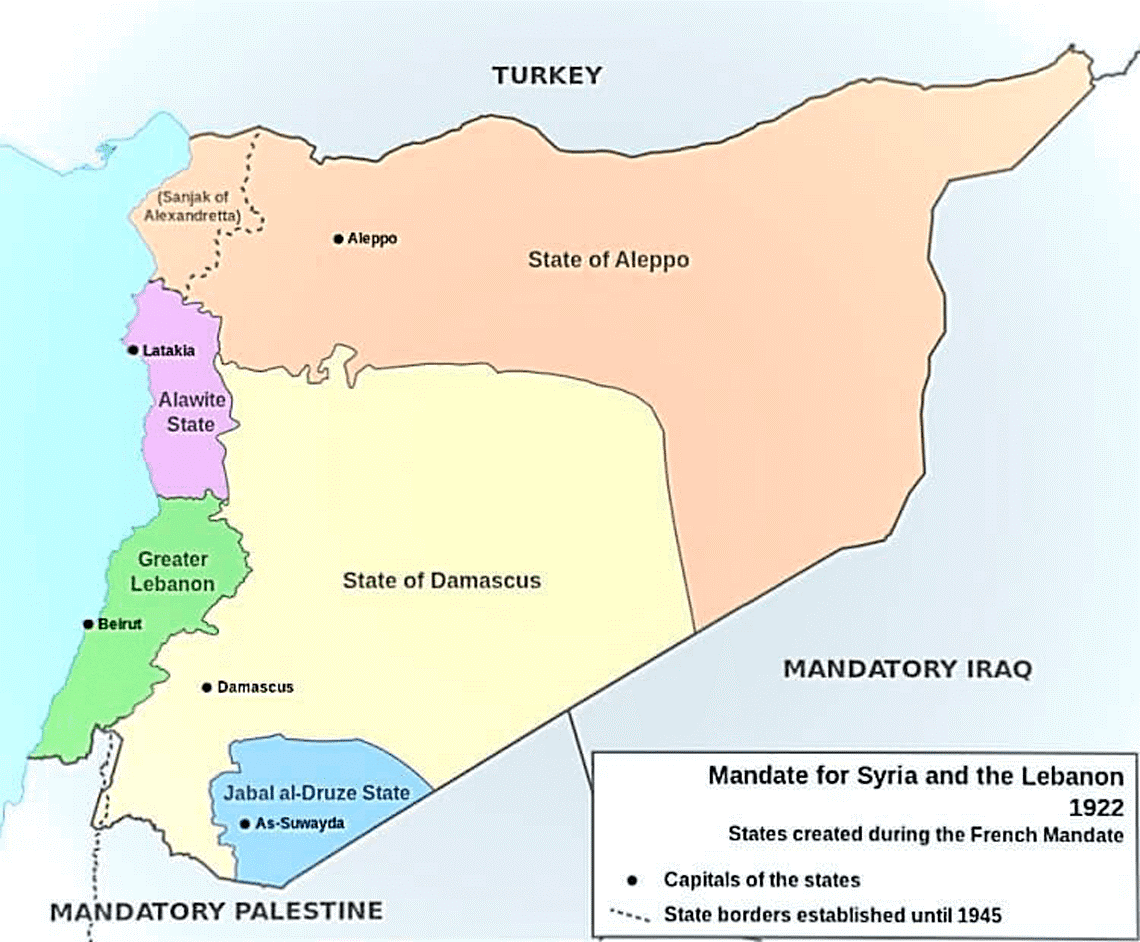
French Relations With Syria and Lebanon Until Independence
France pursued an outright divide-and-rule policy. Dividing the region along ethnic and religious lines, it established six entities: the State of Damascus, the State of Aleppo, the Alawite State centered on the Nusayris, the Druze-centered Emirate of Jabal al-Druze, the Republic of Hatay, and the State of Lebanon.[35] According to William Cleveland, the economic rationale for France’s Levantine presence lay in French companies’ huge investments in railways, ports, and trade during the Ottoman Empire’s final years. Beyond the strategic need to counter British influence, imperial circles believed France could not be a Mediterranean power unless it gained a Levantine foothold alongside its North African presence. (Cleveland, 2008)
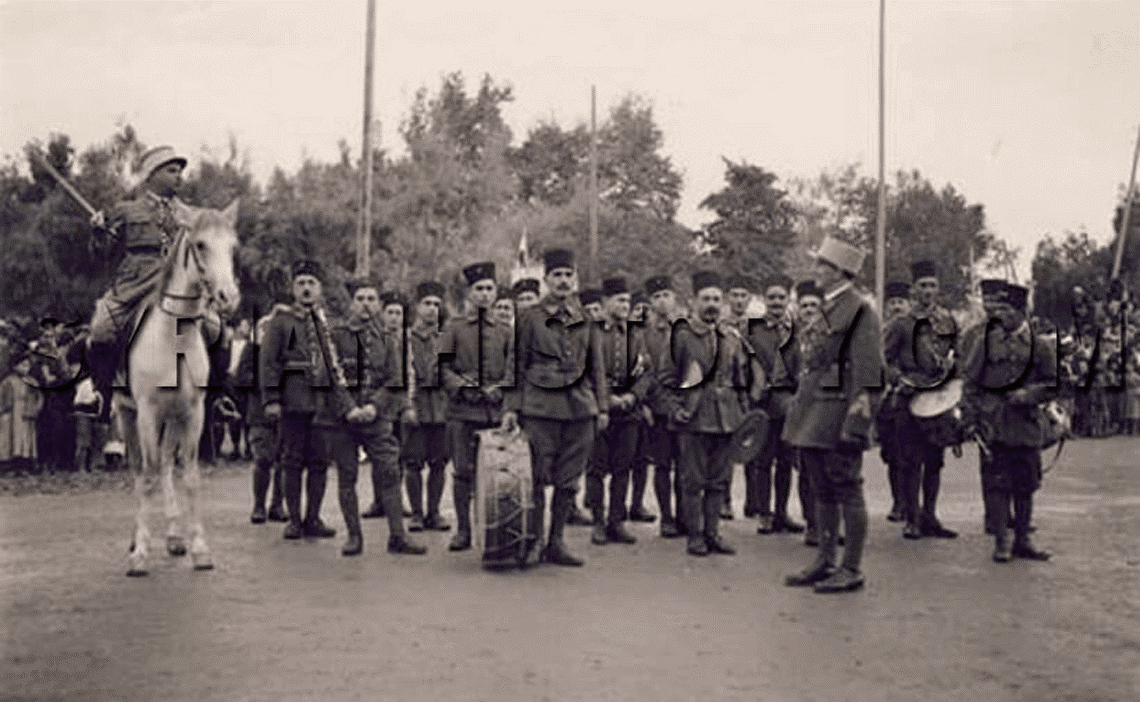
French policy in Syria operated through a large, expensive, often cumbersome bureaucracy, supported by a pervasive intelligence service and the 15,000-strong Armée du Levant. At the top stood the high commissioner for Syria and Lebanon, based in Beirut. Every Syrian official had a French adviser with veto power over even the smallest details. Training Syrian officers nevertheless appears to have received greater emphasis than developing the civilian bureaucracy.[37]
A major revolt erupted in Syria in 1925. Druze forces led by Sultan al-Atrash expelled the French from Jabal al-Druze, inspiring other areas and spreading the uprising nationwide. It continued until substantial French reinforcements arrived in 1927, leaving a devastating human and economic legacy: 6,000 Syrians died, thousands became homeless, and Damascus’s commercial center was partly ruined. Although France retained control, its plans changed. (Cleveland, 2008) The revolt shifted political balances. The National Bloc emerged, led by prominent families inherited from the Ottoman era. Its leaders wanted independence and territorial integrity, but also wanted to lose their own power following a French withdrawal. France favored working with them to prevent another 1925-style revolt. Bloc leaders gained little administrative experience under the mandate. France’s refusal to enter into an agreement setting out its future intentions for Syria, and its reluctance to permit the development of autonomous local institutions, frustrated Syrian political circles. The elected Constituent Assembly drafted a constitution in 1929, but France rejected it and produced its own a year later. This preserved mandate authority and prevented Syria from interfering with French privileges. For the next six years, Syrian presidents and prime ministers retained their offices and parliament met annually, but France’s legislative veto reduced political life to a farce.
France’s transfer of Hatay, which Syria regarded as its territory, to Türkiye also angered Syrians. (Cleveland, 2008) Lebanon was different. In proclaiming Greater Lebanon in 1920, General Gouraud sought to ensure that Maronites would not be incorporated into a Muslim Syrian state. (Cleveland, 2008) French policy there was entirely religion-based, seeking to exploit the political complexity arising from religious differences. Viewing Lebanon as their homeland and themselves as descendants of the Phoenicians, Maronites identified more with the Mediterranean than with the Arab
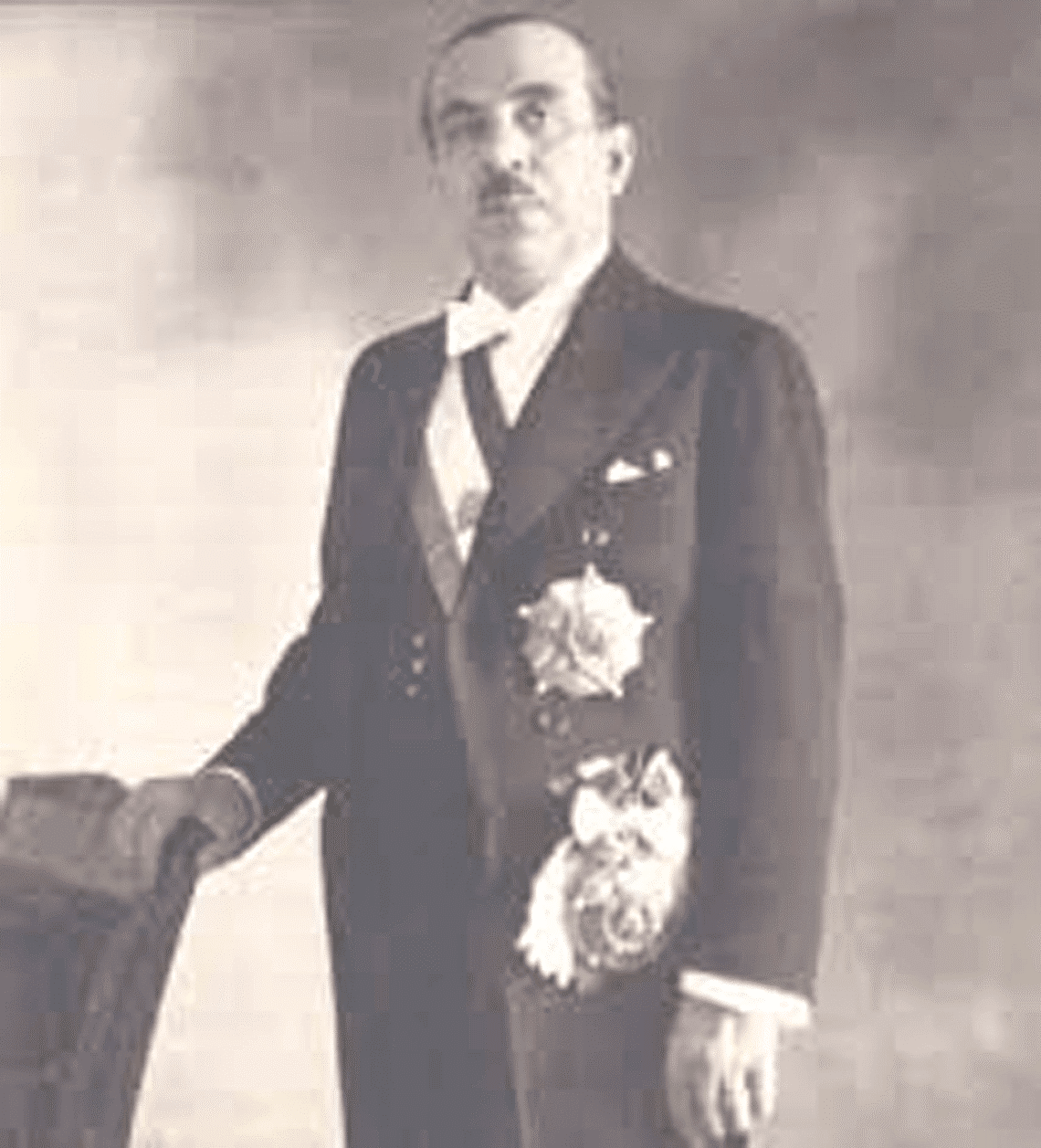
world. Muslims, by contrast, firmly identified with the Arab world. The Maronites’ accommodating stance toward France made a constitutional transition easier than in Syria. The Lebanese Republic was established in 1926, but the mandate remained, and France controlled foreign relations. Every ministry had a French adviser. In the 1930s, Émile Eddé and Bechara al-Khoury emerged as leading Maronite politicians. Eddé located Lebanon’s interests in France rather than the Arab world; al-Khoury argued that no future could be built without agreement with the country’s Muslims. (Cleveland, 2008)
Following these debates, the Chamber of Deputies elected Eddé president in 1937. He appointed a Muslim, Khayreddin al-Ahdab, prime minister. This system continued until the late 1980s. France’s occupation after World War II and the establishment of the Vichy government alarmed Britain about German influence

in the region, prompting cooperation with Charles de Gaulle. Although voters rejected French interference in Syrian and Lebanese domestic affairs in the 1943 elections, France refused to accept this. De Gaulle, a believer in the French Empire, wanted to protect French interests and began expanding the garrisons immediately after the war. Memories of the 1920s revived, anti-French unrest grew, and the French answered violence with violence. They bombarded Damascus from the air and ground, killing approximately 400 civilians. British intervention secured a cease-fire, and France ended its military presence in Syria and Lebanon, whose independence had formally been recognized in 1941. (Cleveland, 2008) France took a similar stance during Algeria’s independence war, although de Gaulle ultimately ended that occupation.
Relations From World War II to the Arab Spring
Nazi occupation inflicted wounds difficult to heal, making France’s role in Middle Eastern politics limited for the first thirty years. The principal exception was perhaps the Suez Crisis. Following the canal’s nationalization in 1956, France acted alongside Britain and Israel against Nasser to protect economic interests. Otherwise, it is difficult to identify an active French Middle East policy. By the late 1960s, as it recovered domestically, France, still remembering its World War II humiliation, left NATO and twice vetoed Britain’s application to the European Community. This arguably isolated it somewhat internationally. Partly because of this policy, however, Britain and France maintained regular regional oil imports during the 1973 crisis, having refrained from openly supporting Israel in the Yom Kippur War. (Chitadze, 2012)
After 1990, as the Cold War ended, France joined other European countries in supporting the First Gulf War. With the European Union’s establishment shortly afterward, French foreign policy can be said to have diverged little from Europe’s general approach. In the 2000s, following September 11, France acted with NATO and sent troops during America’s interventions in Afghanistan and Iraq. Its joint cease-fire proposal with the United States to the UN Security Council during the 2006 Lebanon crisis can likewise be seen as an effort to demonstrate a regional presence.
Turning briefly to French–Israeli relations, Britain pursued a more active policy because the territory where Israel was established had been under British mandate. Substantial Jewish migration also took place from France to Israel. These Jews still hold economic and political power in France. Thus, although France sometimes hesitates toward Israel, it does not act against it, occasionally mediating as during the Lebanon crisis. As the Suez Crisis showed, their interests can bring them together. In the 2010s, Israel valued France particularly for the support it sought against Iran’s nuclear program. This need was frequently raised in meetings between Netanyahu and Hollande.[1]
In our view, France also matters to Israel because it can exert economic sanctions on Iran. Total has substantial investment there, and France’s direct and indirect trade networks are broader than those of other Western countries, perhaps excepting Germany. Israel seeks French support to strengthen its leverage against Iran over the nuclear program.
France’s Response and Role During the Arab Spring and Its Aftermath[2]
When the Arab Spring erupted in 2010, no one expected a social movement of this magnitude in the Arab world. For France, its initial significance was that it began in former colonies such as Tunisia, Algeria, and Morocco, within what it considered its sphere of influence and where it maintained active trade networks, before spreading across the Arab world. Tunisia’s Jasmine Revolution toppled Zine El Abidine Ben Ali; Algeria lifted its nineteen-year state of emergency; Morocco’s King Mohammed VI made various concessions. The speed of events created uncertainty in French and European responses. Initially favoring governments in their rhetoric, they later sided with demonstrators. Another factor was solidarity protests within France, home today to hundreds of thousands of migrants who had sought refuge from the Middle East. They held small demonstrations supporting their peoples. Beyond Tunisia, Algeria, and Morocco, France’s stance in Libya was important. A Paris summit on March 19, 2011, attended by UN representatives and Britain, the United States, and Germany, discussed intervention. While it continued, French reconnaissance planes began flying over Libya, formally violating its border. US missiles began striking hours later. The operation weakened Gaddafi’s forces, and rebels gained control. Libya, alongside Syria,

was one of two regional countries to descend into civil war, excluding Egypt’s coup and subsequent developments. The reasons for intervention remain debated, while a similar impasse in Syria raised the possibility of intervention there. After chemical weapons were used, crossing what Obama and Hollande called a “red line,” the possibility was seriously discussed. Hollande’s government insisted on intervention, but opposition from NATO countries’ publics and parliaments, as well as Iran and Russia, put it on hold. US Joint Chiefs chairman Dempsey told the House of Representatives that an attack would yield no benefit and resolve nothing,[3] while Britain’s parliament refused authorization, leaving France alone with the issue. Today, Syria’s civil war appears left to its own dynamics, although France continues to follow developments closely.
Conclusion
Relations between France and the Middle East span more than 1,300 years. The closer we look, the more detail and complexity appear. Whatever this study’s length, its scope and explanations will inevitably remain inadequate. France has been actively present, particularly economically, for a thousand years and maintains excellent relations with Christian communities. The former predominance of the French language and Middle Eastern intellectuals’ studies in Paris gave it considerable cultural influence. Despite being a Western European country, France never lost interest in the Middle East as trade needs developed. It always sought some presence, competing fiercely with Britain until losing Egypt began turning the balance against it. Its stance amid the continuing Arab Spring and its effects demonstrates that this interest persists and that it will consider everything, including military intervention, to protect economic interests.
Notes
[1] Star Gazetesi. (2013). İsral’in Son Umudu Fransa.
http://haber.stargazete.com/dunya/israilin-son-umudu-fransa/haber-807127
Haber Türk. (2013). Netanyahu Holande ile Görüştü.
http://www.haberturk.com/dunya/haber/895377-netanyahu-hollande-ile-gorustu
[2] Sources used in this section:
Hürriyet Gazetesi. (2013). Planet.
http://www.hurriyet.com.tr/planet/17317886.asp?gid=286
Vatan Gazetesi. (2013). Gündem.
http://haber.gazetevatan.com/Haber/366173/1/Gundem
Hürriyet Gazetesi. (2013). Dünya.
http://www.hurriyet.com.tr/dunya/17315295.asp?gid=373
Hürriyet Gazetesi. (2013). Planet.
http://www.hurriyet.com.tr/planet/17319157.asp?gid=373
Hürriyet Gazetesi. (2013). Planet.
http://www.hurriyet.com.tr/planet/17315721.asp?gid=373
Haber Türk. (2013). ABD Füzeleri Vuruyor.
http://www.haberturk.com/dunya/haber/612147-abd-fuzeleri-vuruyor
Vatan Gazetesi. (2013). Libya’ya Operasyon Başladı
http://haber.gazetevatan.com/libyaya-operasyon-basladi/366112/30/Dunya
Hürriyet Gazetesi. (2013). Dünya.
http://www.hurriyet.com.tr/dunya/17320743.asp?gid=373
CNN. (2013). Libya Civil War
http://edition.cnn.com/2011/WORLD/africa/03/20/libya.civil.war/index.html?hpt=T1&iref=BN1
Hürriyet Gazetesi. (2013). Planet.
http://www.hurriyet.com.tr/planet/24591247.asp
Türkçe Haberler. (2013). Suriye – Rusya.
http://www.bbc.co.uk/turkce/haberler/2013/09/130905_g20_suriye_rusya.shtml
Bloomberght. (2013). Suriye’ye Asker Müdahale Tartışılıyor.
http://www.bloomberght.com/haberler/haber/1415383-suriyeye-askeri-mudahale-tartisiliyor
Milliyet Gazetesi. (2013). Suriye’ye Askeri Müdahale Olacak
http://dunya.milliyet.com.tr/suriye-ye-askeri-mudahale-olacak/dunya/ydetay/1757029/default.htm
NTV. (2013).
[3] http://www.ntvmsnbc.com/id/25461840/
Bibliography
Altuniş Gürsoy, B. (2006) Türk Modernleşmesinde Sefir ve Sefaretnamelerin Rolü. Bilig, (36) 139-165.
Ay, M. (2007). Paris Mekteb-i Osmanisi’nin Kuruluş, Amaç ve İşlevi[Unpublished master’s thesis]. Ankara Üniversitesi.
Bardın, J.P. (1960). L’agriculture Française, La France D’Ajourd’hui Son Visage. Sa Civilisation.
Chıtadze, N. (2012) The Role of the OPEC in the International Energy Market. International Black Sea University Journal of Social Science, 1(1), 5-12.
Cleveland, W.L. (2008). Modern Ortadoğu Tarihi. (Trans. M. Harmancı). Agora.
Curtıus, E.R. (1938). Fransız Medeniyeti. (trans. S. Eyüboğlu). Devlet.
Friedman, I. (1917). Germany, Turkey and Zionism, 1897 – 1918. At the Clarendon.
Holt, P.H. (1980). Egypt and the Fertile Crescen A Political, 1516 – 1922. Cornell University.
Joinville, J. (2002) Bir Haçlının Hatıraları. (trans. C. Kanat). Vadi.
John P. S. (1977). France and Ottoman Lebanon 1861-1914, The Middle East Centre St. Antony’s College Oxford, Ithaca.
Karal, E. Z. (1970). Osmanlı Tarihi. TTK.
Kocabaş, S. (1990). Tarihte Türkler ve Fransızlar. Vatan.
Ludwıg, E. (1972). Napoleon. (Trans. M. Kabaağaç). Ak.
Maalouf, A. (2011). Arapların Gözünden Haçlı Seferleri. (Trans. A. Berktay). YKY.
Mange, A. A. (1940). The Near Eastern Policy of the Emperor Napoleon III.The University of Illinios.
Mason, H. (1970). Reflections on the Middle East Crisis. Haguex, Mouton.
Nureddin A. A. (2010). Endülüs Tarihi. Ensar.
Özdemir, M. (2012). Endülüs Müslümanları Kültür ve Medeniyet. Türkiye Diyanet Vakfı.
Price, R. (2012). Fransa’nın Kısa Tarihi. (Trans. Akpınar Ö.) Boğaziçi Üniversitesi.
Şişman, A. (1965). Tanzimat Döneminde Fransa’ya Gönderilen Osmanlı Öğrencileri. TTK.
Türkiye’nin Dış Temsilcilikleri Bulunan Ülkeler Hakkında El Kitabı - Avrupa Ülkeleri 1. Kitap. (1988). Dışişleri Bakanlığı.
Tibawi A. L. (1969). A Modern History of Syria Including Lebanon and Palestine. Macmillan St. Martin’s.
Türk Ansiklopedisi. (1985). Milli Eğitim Bakanlığı Yayınları.
This article was written in 2013 and published by KAF in two parts.