
Nadide bir güher telef ettim dirig ü âh
Hâk içre defn edip gerü gittim dirig ü âh
Şeyh Galib
(Alas, I have lost a peerless jewel. I buried him in the earth and returned.)
I used to compare my relationship with Yücel Ağabey to the friendship between Şeyh Galib and Esrar Dede. After the doctors told us he had died, as I waited outside intensive care to receive the body of this man I regarded as an elder brother, lines from Galib’s elegy kept passing through my mind... I have saved the complete elegy for the end...
I was nineteen when I met him. His forties and my twenties passed together. He never left me alone at my hardest moments, never withheld his presence. I never left his side heavyhearted. Whenever I was troubled, he would lighten my heart before sending me on my way.
We laughed, enjoyed ourselves, sometimes grew deeply moved and absorbed, and often dreamed. We also argued, but never about anything except work and creating things. At the height of a debate, he would say in his resonant voice, “I’ll put you under my foot in a minute! Don’t rely on your height—I’ll find a few people and we’ll all take you on,” then laugh. Sometimes he recruited our teacher Tolga Er, egging him on with “Come on, let’s beat him up,” and approached me with mischievous plans. If it concerned the team, he would refer to Simurg: “I’ll pluck those feathers of yours, Oral Bird! You’ll see them flying everywhere,” and laugh. He was always laughing. Then he would joke about his own laugh and laugh again.
Countless nights we stayed up in library corners talking about a thousand subjects. Although I was a frequent guest, whenever I arrived he would tease, “Don’t come! Who’s going to clean up now?” Then: “Never mind, you’re family; I’ll make you do it,” followed by laughter. After so much work together, we naturally developed a language of our own. I will use it occasionally here. He never dwelled on what was bad; he attended to his work. When he had to discuss bad things, he spoke delicately and chose his words carefully. One of his most important lessons to me was to focus on the work without speaking ill, whoever had hurt you. Still, forgive me if I touch a nerve along the way...
I had only just finished my first undergraduate year when we met. Our meeting had its peculiarities, but I will not tell that story here. From that first day until his death, he used the Gallipoli Campaign to show people—especially children—the importance of sacrifice, goodness, conviction, and determination. He exhausted his heart, mind, and body in this cause. From 2003, Çanakkale became his everything. For fifteen full years, he worked on nothing else. The events of that journey wore him down: sometimes people stole his ideas; sometimes they attacked him over his hair, beard, or education. His heart attack came during this period... Yet I know he pursued the work in the heat even just after leaving hospital. On many nights, when youthful anger made me rage and swear, he would slowly raise his hand and smile. “Let it go,” he would say. “Individuals don’t matter. Whether I do it or someone else does it doesn’t matter at all. What matters is that the work is right, that it achieves its purpose and does some good.” For him, it was never who did the work, but whether it was “right” and “useful.”

He always opposed the wrongful act, never pursued the person responsible. He never resented someone personally for injustice or disrespect. When he saw wrongdoing, he challenged it without personalizing matters. If the other person made it personal—and I witnessed much rudeness and misconduct—he would “leave them with a gracious departure.” That is another of the most important things he taught me.
When someone produced pointless, misguided work around Çanakkale to make “a few coins here, a few there,” however, he complained in his own way. “They’re doing ‘spindirik’ work to squeeze money out of everyone,” he would say, laughing. Then: “Doesn’t ‘spin’ in English mean something to do with turning? That’s what they do—turn with the wind and the circumstances. That’s why I call it spindirik. It’s not swearing, mind you!” And he would laugh again...
How well he understood people’s hidden intentions and thoughts. Yet he took great care not to wound them and to keep the work moving. The work mattered; everyone otherwise had their own path. He did not dwell on wrongs done to him, but never excused wrongs against Çanakkale and the fallen. He tolerated those seeking to exploit the dead only up to a point, warned them politely, then withdrew. Whenever he stopped speaking to someone, that was why.
Many times, even when people had no claim to it—and even knowing they looked down on him—he would knock on their door and say, “You’re the expert; this cannot be done without your approval and supervision,” presenting projects he had conceived entirely himself. As I said, the work, not the name, mattered. “As the work grows, we will diminish and disappear. We won’t be there; Çanakkale will,” he said. “With so many nameless fallen, how could we put our egos into something like this, Oral?” A few months ago, our team won first place in the Education Ministry’s EBA competition. He was the team’s brain. He did not even want our work placed on the website: “That would make it personal; it belongs somewhere else.” He contributed most to that national achievement but said not a word on social media or elsewhere. His mind was on the second, even third, project. “We’ll do something bigger,” he said.
So many “cash-academics” and “tumbling pigeons” had descended on Çanakkale that, toward the end, he could no longer bear it. One day he told me: “They’re such strange people, Oral. If someone said a martyr’s bones were worth money, they’d start digging across the water. That’s the kind of character they have.” Those were the harshest words I ever heard from him...
Yet he felt such profound love and respect for people who practiced scholarship properly and worked sincerely that, regardless of their age or occupation, he spoke almost at attention, afraid of hurting them. He often read me a message or comment before sending it: “It’s not inappropriate, is it, Oral? Nothing wrong? I haven’t written anything hurtful, have I?” Yet there was nothing in those messages except Çanakkale. He was a delicate soul. I learned delicacy from him. Before every step, he invariably consulted more than one person. I saw him consult fourteen- and fifteen-year-olds many times. He always focused on the work...
Often he called at three or four in the morning: “Oral Hocam, something’s on my mind,” and we would talk for hours. After I graduated, he always called me hocam, “my teacher,” though to me he was always an elder brother.
He knew the eighties and nineties intimately: Kadıköy when it was truly Kadıköy, and “Cadde,” the Avenue. I have never known anyone who understood enjoyment better. He knew and taught the proper way to do everything. His descriptions of how something should be done made you long for it. He boasted of watching Friends repeatedly. He talked to animals and conversed with trees. Once, quite seriously, he tried to console a lower-megapixel camera displaced by a higher-megapixel one. That was how carefully he respected others’ “rights”... He was a sincere Muslim, knowing the Quran verse by verse. In our deeper conversations, he would sigh: “If I can create something worthy of the fallen, perhaps then I’ll have the face to prostrate myself and ask God to forgive this sinful life...” He never advertised this. He lived everything inwardly and opened the contents of his heart to no one...
He disliked putting himself forward. Despite our insistence, he never gave a seminar, though he contributed intellectually and physically to most of them. He was, after all, one of Simurg’un Sedası’s principal founders, but that is another story...
For a long time, he did not write either. In 2014, while we were sitting together, he excitedly said, “Look what I’m going to show you,” and placed a pile of documents before me. They were transcriptions of wartime correspondence. He had received them less than a day earlier but had already read and analyzed much of them. Like a child showing off treasures, he poured out his findings: “See this expression? It disproves that claim,” and “This reveals another side of that event.” For two years, I had urged him to write. This time I could not hold back. Trusting our closeness and pushing the bounds of respect, I said: “Brother, forgive me, but you keep saying you’re ill. One day you’ll drop dead, and all these analyses will be buried with you. You’re not paying the charitable due on your knowledge. Write it down!” I think that was the first time he accepted my insistence. Soon afterward, in early 2015, he opened a blog. That was how he began writing.
After his death, while making changes to his social media on the website’s behalf, Facebook showed me his announcement under “Your Memories”... Three years had passed. I reproduce his February 22, 2015 post exactly:
“For several days, I have been working to write about a subject... At last, I have created a blog and am sharing the pieces I have completed... I hope, in good health, to continue addressing other subjects without interruption... This blog will contain my personal perspective on the Gallipoli Campaign, examinations of technical matters, and, in short, my personal research, interests, and curiosities... My first article draws on the still-unpublished war diaries of the 27th Regiment, maps and sketches, other written sources, observations, and field research... Perhaps putting my research into writing in this way may even be useful... A student’s assignment, after all... ?”
“A student’s assignment, after all...” That was how he saw it. With another valued “brother’s” contribution, the blog soon became a website. He approached it with such dedication that even the tiniest flaw or omission gave him genuine heartache...
Later, I urged him again: “Make these articles into a book. It will make academic citation easier and prevent plagiarism.” “Let it be,” he replied. “If I make a book, perhaps 750 people will buy it, perhaps not. This way, I reach thousands. That is what matters. Unless the knowledge reaches people, there is no point making a book. People must be able to learn what happened here.” God knows how many nights we “argued” over it...
As the website became better known, he grew happy as a child. About two months ago, he was delighted that a book from İş Kültür Yayınları had cited it. Sitting up in his sickbed, he joyfully showed me the passages line by line: “See? The work here is starting to help and reach people.” I had come to make soup because he was ill—and seriously so—but he was still telling me about the work and what would come next...
During his final six months, he spoke constantly of death and what would happen to the labor invested in the website after he was gone. He pressed us so hard: “You’re wasting time. I’m counting days, and you’re squandering weeks.” We did not understand... We held meetings lasting as long as fifteen hours, and while still alive he obtained promises I now regard as instructions and duties. I hope I can do justice to what you entrusted to me, brother.
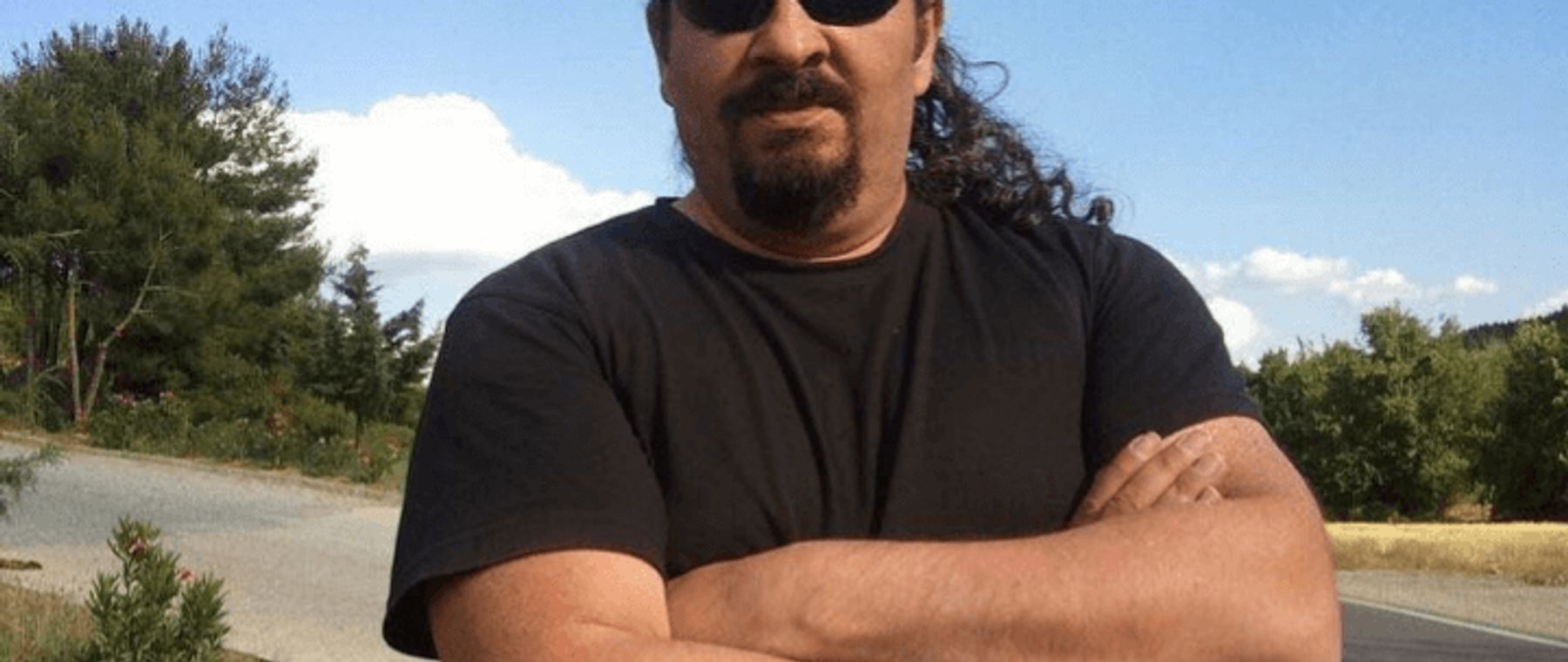
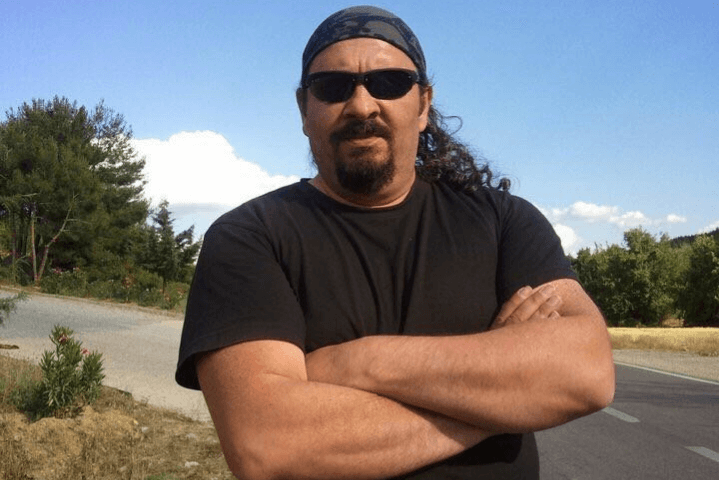
We have lost a heart and mind of such stature that nothing can replace them... A great man of understanding, a dervish, a friend, an elder brother. Yücel Özkorucu passed into God’s presence at the hour of Friday prayer, only fifteen days after turning fifty-three. Pages more could express our pain, but every word falls powerless before death. We can only bow our heads and quietly endure separation. Simurg’un Sedası has suffered its first loss...
For years, he told me in almost every conversation: “One day something will click, and I’ll be gone, Oral. My heart is weak, my illnesses have gone wild, time is short; we have to work and create.” After his first heart attack, such words were always on his lips. Ten years later, one day something really did “click” in his brain, and he was gone...
He loved Kilitbahir. Whenever he wanted to reflect, he escaped there, or took me to the İkinci Kordon waterfront to sit at particular hours and watch it across the water. He searched for a little place there to buy, but it was not to be. Sometimes people offered one for nothing; he refused, wanting to live without owing favors. “Oh, Oral, if only I had four little walls—even a grave of two square meters...” he often said. He never got his four walls, but Kilitbahir became his eternal resting place. One side of my family comes from there. Knowing this, he would mischievously laugh: “It’s my village now, not yours.” You were there at the end, walking through the battery with the outline of the project you entrusted to us in mind... You fell there, at Namazgâh Battery. Now you rest in the place you loved... How can I call it my village anymore? Kilitbahir truly means something different now because of you, brother...
He lived honorably and upright; we bear witness. He lived for truth and spent his last strength working for what was right... On your behalf, we have no regret, no “if only.” You lived cleanly. You begged from no one, sought no one’s help. “The idea matters,” you said, and ran without hesitation or condition to anyone who supported it. We are struggling only with the pain of separation. Your spiritual presence will remain with us. You will exist in everything we produce. (Had you heard that, I know you would slowly wag a finger: “Just let me find it below standard! Just you fail to take care!”) If we ever hurt your heart, I know you forgive us. We have no fear of that, because you quietly carried everything and everyone who touched your life within you; I witnessed it... You always sought to create and multiply. In leaving, you gave me many new friends and elder brothers and sisters, enriching our lives again... Your secrets and trusts are safe with me and your friends. From now on, may the fallen be your companions, brother... You are in our work... In our prayers...
Elegy / Şeyh Gâlib (English Renderings of the Modern Turkish Explanations)
Kan ağlasın bu dîde-i dürbârım ağlasın
Ansın benim o yâr-ı vefâdârım ağlasın
Çeşm ü dehân u ârız u ruhsârım ağlasın
Başdan başa bu cism-i siyehkârım ağlasın
Ağyârım ağlasın bana hem yârim ağlasın
Gûş eyleyen hikâyet-i Esrâr’ım ağlasın
(Let these pearl-laden eyes of mine weep blood,
Let them remember my faithful beloved and weep,
Let my eyes, mouth, cheeks, and face weep,
Let this body, clothed entirely in mourning, weep,
Let strangers and loved ones alike weep for me,
Let those who hear the story of my secrets weep—those who hear Esrar Dede’s story, his death.)
Nâdîde bir güher telef etdim dirîg u âh
Hâk içre defnedîp gerü gitdim dirîg u âh
(Alas, I have lost a rare jewel.
Alas, I buried him in the earth and returned.)
Zât-ı şerîfi âleme bir yâdigâr idi
Fakr u fenâ vü aşk u hüner berkarâr idi
Her şeb misâl-i şem benim ile yanar idi
Sâye gibi yanımda enîs-i nehâr idi
Hakkâ tamâm âşık idi yâr-ı gâr idi
Birkaç zaman muammer olaydı ne var idi
(His noble being was a gift to the world,
For love, skill, renunciation of the world and self, and annihilation in God were gathered in him.
Every night he burned beside me like a candle,
By day he was my companion like a shadow, which never leaves one’s side.
He loved God completely, a companion of the cave—faithful and truthful like Abu Bakr.
What harm would there have been in his living a little longer?)
Allâh verdi aldı yine kurb-i Hazrete
Biz kaldık intizâr ile rûz-i kıyâmete
(God gave him, and took him close again,
We remain, waiting for the Day of Judgment.)
Âhir nefesde sohbeti oldu muhabbet âh
Bir yâre urdu bağrıma âh derd-i firkat âh
Gelmezdi hîç kalb-i fakîre bu sûret âh
Ey kâş etmeyeydim o âşıkla sohbet âh
Telh etdi kâmımı o zehrnâk şerbet âh
(In his last breath, he still spoke of love, alas,
The pain of separation opened a wound in my breast, alas,
This poor heart never imagined such a thing, alas,
If only I had never shared the company of that lover, alas,
It soured my desires, poisoned my sherbet, alas.)
Eyvâh elden o gül-i handânım aldı mevt
Esrâr’ım aldı cümle dil ü cânım aldı mevt
(Alas, death took my smiling flower from me,
It took my secrets—my Esrar Dede—my whole heart and soul.)
Meydân-ı Mevlevîde nişân âşikâr edip
Pervâz ederdi şevk ile Ankâ şikâr edip
Eylerdi nây u defle semâ âh u zâr edip
Bulmuşdu kân-ı matlabı Hak’da karâr edip
Almışdı müjde kûyuna yârin güzâr edip
Gitdi ne çâre Gâlib’i hasretli yâr edip
(Showing his sign in the Mevlevi gathering,
He would fly in rapture, hunting the phoenix,
He whirled to ney and frame drum, sighing and lamenting,
He found the mine of his desire by resting in God,
He passed through the beloved’s street and received glad tidings,
He departed, alas, leaving Galib a friend full of longing.)
Olsun visâl-i Hazret-i pîrânla kâmyâb
Kıldı karîn-i kabr-i Fasîh-i felekcenâb
(Fasih, whose station is as lofty as the heavens,
In death drew his grave close to the graves of the spiritual masters.)