

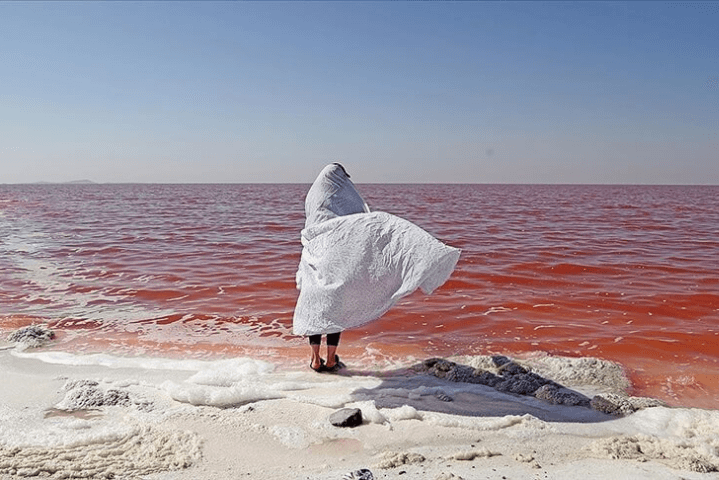
As the weather begins to warm, growing water shortages and drought caused by climate change and misguided water policies are returning to the top of Iran’s agenda. Lake Urmia, in West Azerbaijan province, is once again being discussed in this context. Both as an important regional water resource and as the focus of political debate, the lake holds symbolic significance in Iran’s drought crisis. Various efforts to prevent it from drying out and improve conditions have been underway for a decade. An Anadolu Agency article in 2021 reported that Iranian officials hoped their road map for the lake, 90 percent of which had dried up by 2013, would restore it to the desired level by 2027. Yet remarks made at a conference in 2022 by former Vice President and Agriculture Minister Isa Kalantari suggest the situation is far from encouraging. Experts had issued warnings since the mid-1990s, he said, but officials had not taken them seriously. He underlined the gravity of the situation by saying that “the fate of Iran’s regime depends on this lake, which has shrunk by 95 percent.”

The most important measure to prevent the lake from drying out is the channel transferring water from the Kani Sib Dam, whose construction prompted considerable controversy. It opened on February 24, 2023. The channel was financed and built by the National Development Fund and the Khatam al-Anbiya Construction Headquarters, affiliated with the Islamic Revolutionary Guard Corps (IRGC). Construction of the 36-kilometer channel began in 2016. It was planned to transfer 300 million cubic meters of water annually to Lake Urmia, rising to 600 million after completion of the second phase. In recent remarks, Mohammad Reza Kavianpour, head of the Water Research Institute under Iran’s Ministry of Energy, discussed its importance. Transferring water from the dam was a restorative measure, he said, and its capacity could be increased once implemented if rainfall was favorable. Nevertheless, “the restoration of Lake Urmia depends in any case on changes in climate, weather, and rainfall,” he added, emphasizing its dependence on precipitation. He said the ministry’s effort was largely reliant on rainfall, but the Lake Urmia Restoration Headquarters would help preserve and improve the lake’s condition as much as possible.
Since the channel opened, Iranian press coverage of Urmia has increased over the past month. Reports generally use a positive tone intended to give people hope, discussing prospects for restoration and the causes of the lake’s decline. A report published by Entekhab News, for example, presented photographs under the heading “Lake Urmia’s Return to Life.” Another report, in Fars News, discussed growing hopes for revival if Iranian experts’ abilities were trusted, saying the channel’s transfer of water had rekindled hope. Similarly, an IRNA report was headlined “Lake Urmia’s Boats Ride Waves of Hope.” It described the lake’s plight in detail and stressed that the issue should remain above politics, while blaming previous governments and highlighting the current government’s concern and attention. According to the report, the lake’s area had increased by 311 square kilometers over the previous year to 1,241 square kilometers, and its water volume had reached 1.57 billion cubic meters.
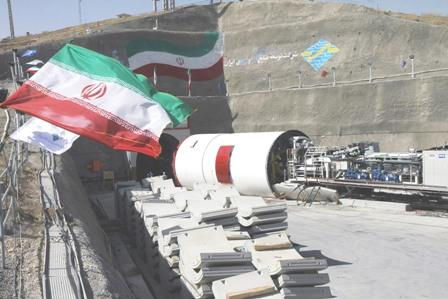
Crediting the Raisi government for the Kani Sib channel prompted objections from supporters of the previous administration. Hassan Rouhani’s Telegram channel stated: “Construction of the Kani Sib Dam began in 2016 and ended in 2020. When the new government took office, only 1,400 meters of the 36-kilometer transfer line remained.”
The channel’s impact on the lake’s restoration will become clear over time. Kavianpour’s remarks suggest that the project alone may not resolve regional water stress and drought. Yet its importance lies not only in saving the lake but also in avoiding the political consequences of its decline. Against opponents’ long-standing claim that “nothing is being done,” the project can be said to have strengthened the government’s hand and given it some breathing room. How politicians and the press presented the opening, the old and new governments’ competing claims of “we did it,” and the language used by both sides make the channel’s political significance and the hopes invested in it clear.
This article was first published by the Center for Iranian Studies (İRAM) on March 31, 2023.
Link: https://www.iramcenter.org/urmiye-golunun-restorasyon-cabalari-ve-siyasi-yansimalari-2351