
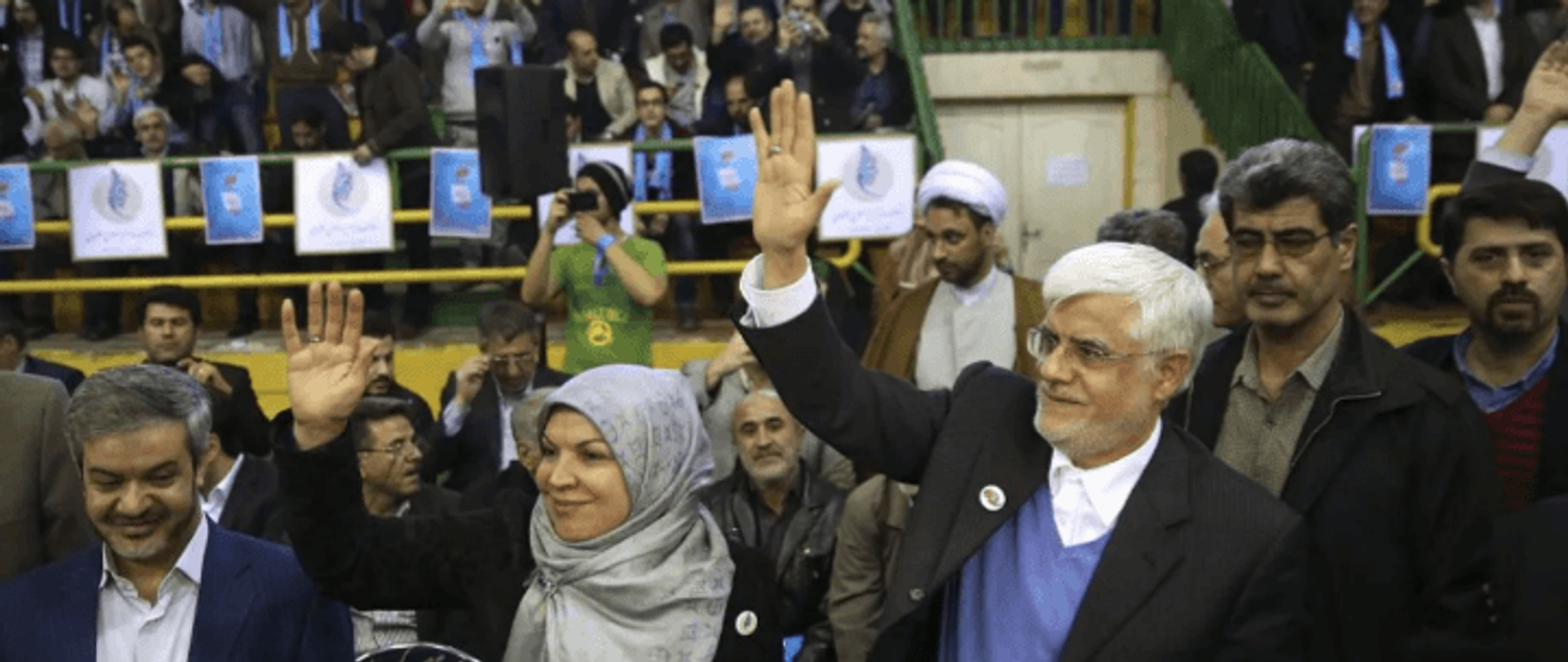

As elections for the Islamic Consultative Assembly on March 1, 2024, approach, Iran is gradually entering an election atmosphere. The period in which prospective candidates could resign from public office ended on June 15, marking the transition to applications and the approval or veto process. Reformists failed to achieve their desired results in the conservative-dominated eleventh parliament for various reasons. The principal cause was electoral engineering that openly cleared the way for conservatives. Similar engineering occurred in the presidential election: first, Javad Zarif’s audio recording was released to the press; then the Guardian Council vetoed numerous reformist figures, most notably Ali Larijani, clearing the path for the strongest conservative candidate, Ebrahim Raisi.
Reformists’ greatest concern about the next parliamentary election is facing similar engineering and another succession of Guardian Council vetoes against their candidates. This has prompted debates within the reformist camp as it tries to devise a new road map and a strategy to prevent a repeat of the previous election. Its greatest potential difficulty is the council’s rejection of prospective candidates’ eligibility. Calls are therefore already being made to avoid figures certain to be vetoed and proceed with those who stand a good chance of approval. An article on the Shahrekhabar website argues that candidates should be safe, “clean” figures around whom election programs, and particularly candidate lists, can be planned. It suggests that figures such as Mohsen Hashemi Rafsanjani, Elias Hazrati, Mostafa Kavakebian, Masoud Pezeshkian, Hassan Rasouli, and Mohammad Ali Vakili would probably be approved. It also recommends figures reformists might consider and vote for. The same article asks whether they might contest the election with unfamiliar faces, but argues that even if this improved their chances of approval, they might struggle to win votes, because reformists have consistently neglected to develop young talent.
Hossein Marashi, secretary-general of the Executives of Construction Party and a prominent reformist, shared his views on the election with the press. He left questions about how his party would proceed and whether it would join an alliance unanswered, saying he did not wish to comment because no decision had yet been made. Asked whether the party would contest the election alongside the Reform Front, he said he “could not decide that question alone,” adding: “All reformist groups and parties are deciding to enter the twelfth parliamentary election as Iran’s Reform Front. As the Front’s new term has only just begun, its members and officials must first be elected, after which decisions concerning the election must be made.” Finally, he emphasized that there had been no developments within the Front concerning the twelfth parliamentary election. His remarks suggest that reformists have yet to establish a concrete road map, reach a coalition decision, or devise a corresponding strategy.
Reformist figure Nasser Ghavami also offered his views on the Khabaronline website on June 18, once again emphasizing low turnout and the economic situation. When politicians visit constituencies, he said, people no longer ask for infrastructure or roads; they say they are hungry and their tables are empty. He criticized previous electoral engineering, saying efforts to exclude reformists entirely and create a politically homogeneous government were mistaken and worked against those pursuing them. “If reformists withdraw entirely and the government becomes politically homogeneous, conservatives will disagree, argue, and face problems of this kind,” he said. In his view, conservatives have presented an appearance of unity in opposing reformists. If reformists leave the stage and parliament, the government, and city and village councils all become politically homogeneous, conservative disagreements will intensify. Conservatives, he said, would have no electoral difficulty because they engineer elections: they select a few people in every province and constituency, prepare them, and ultimately send them to parliament as representatives of the people. Reformists, by contrast, would not participate in the twelfth parliamentary election or submit a list. He therefore claimed that the election would be controlled by one side and would not matter. In short, Ghavami argued that people’s priority was hunger rather than infrastructure and projects, and that electoral engineering would occur in any case, leaving the election in one camp’s hands.
Despite these statements, reformist hopes are not exhausted. In the last week of May 2023, fifteen reformists seeking a “comeback” and the recovery of lost political ground met to select the leadership of their umbrella organization, the Reform Front, renewing hopes of a political return. The meeting coincided with the anniversary of the 1997 presidential election that brought Mohammad Khatami, the movement’s standard-bearer, to power. Participants included former Front leader Behzad Nabavi, former Deputy Foreign Minister Mohsen Aminzadeh, Mohammad Reza Jalaeipour, religious-nationalist activist Emad Bahavar, former Tehran City Council chair Mohsen Hashemi Rafsanjani, and Fakhrosadat Mohtashamipour, wife of imprisoned former Deputy Interior Minister Mostafa Tajzadeh. According to sources, although Khatami remains the group’s focal point, he appears unlikely to dictate its decisions. Nabavi is instead considered highly likely to continue leading the Front.
Judging by developments so far, reformists have not produced a tangible road map for the coming election. Their greatest obstacle in devising a strategy is the inability to predict the stance of the Guardian Council and the establishment, which rejected candidates more harshly than even expected in the parliamentary and presidential elections. Winning the election has effectively become secondary to overcoming the council’s vetoes. In selecting candidates, reformists may therefore prioritize the council’s demands over voters’ wishes, seeking to clear the vetting process and prevent a repeat of the last election.
Given the social unrest of the past three years, low turnout, and public reactions extending to civil disobedience, reformists might be treated somewhat more tolerantly this time. As noted above, however, figures such as Ghavami have little hope of a change in approach. Their search for a comeback will clearly continue, but how it will be received, first by the establishment and then by the public, remains uncertain. Well-known figures are likely to be vetoed, while unfamiliar new faces risk failing to win public support. This dilemma is the reformists’ most critical problem at this stage.
This article was first published by the Center for Iranian Studies (İRAM) on June 23, 2023.
Link: https://www.iramcenter.org/milletvekilligi-secimlerine-dogru-reformcularin-strateji-arayislari-2393